Hunger: A Memoir of (My) Body


Rating:
 ⭐⭐⭐⭐
Author: Roxane Gay
Genres: Memoir, Non-Fiction, Feminist
Read: May 2017


I read Roxane Gay’s Bad Feminist a few years ago and really enjoyed her essays, but I definitely think this a stronger book and one that takes a lot of courage to write.

“The Story of my body is not a story of triumph… Mine is not a success story. Mine is, simply, a true story.”

This is one of the opening passages in Hunger and why I think Gay is such a brave writer. Her memoir is ultimately about her being gang-raped at the age of 12 and how that has since changed and shaped her entire life. Gay never told anyone about her rape and kept her fear and shame bottled up for most of her life, turning to food as a comfort. Making herself big as a way to feel safe within her body.

This is a truly heartbreaking story because Gay still suffers PTSD along with the added challenges of moving around in a world that is not built for people her size, much less black women of her size. She offers many anecdotes on what it’s like to live in a world where you’re medically classified under the horrible term of “super morbidly obese” (seriously, who decided this was okay?).

I’ve been trying to educate myself on intersectional feminism and Gay’s memoir was helpful in recognizing the ways I benefit from thin privilege. There are many obvious ways in which I benefit from thin privilege, but Gay’s memoir highlighted other ways such as the constant worries she faces about fitting in chairs and whether or not she’ll be able to easily access the stage at events she speaks at. She tells one story of a time she spoke at an event that had a stage about 2 feet off the ground with no stairs and how mortifying it was as she struggled to get onstage and then proceeded to have to crouch over her chair for 2 hours because she felt a small crack when she first started to sit.

One of the most helpful articles for me in understanding white privilege was Peggy MacIntosh’s White Privilege: Unpacking the Invisible Knapsack as well an imitation essay, The Male Privilege Checklist. This essay ends with the ultimate check of male privilege being that “I have the privilege of being unaware of my male privilege.” I was reminded of this while reading Gay’s memoir because it helped me realize some of the ways in which I am unaware of my thin privilege (as well as reinforcing some of the ways I was aware of).

Gay’s honesty is part of what makes this such a strong memoir, but I also really appreciated her insights into what it means to be a woman in our society. How we treat the thousands of girls and women who have been emotionally, physically, or sexually abused – how we treat black, fat, disabled, poor, or gay girls and women – and how that affects our body image, self-confidence, and the way we grow up and who we develop into.

Like I said, this is a heartbreaking story, but also a very important one.

“He said/she said is why so many victims don’t come forward. All too often, what “he said” matters more, so we just swallow the truth. We swallow it, and more often than not, that truth turns rancid. It spreads through the body like an infection. It becomes depression or addiction or obsession or some other physical manifestation of the silence of what she would have said, needed to say, couldn’t say.”

Warcross


Rating: ⭐⭐⭐⭐

Author: Marie Lu
Genres: Science Fiction, Young Adult
Read: Oct. 2017


I love being surprised with a good book! I haven’t read Marie Lu’s series Legend, I didn’t really like The Young Elites very much, and sci-fi isn’t one of my favourite genres, so I wasn’t expecting to love Warcross (or to be honest, I didn’t think it would ever make it off my TBR). But I saw so many positive reviews and I was in the mood for something fast paced, so I decided to give it a try. I’m so glad I did because I really really liked Warcross!

I love the world Marie Lu has built in Warcross. It’s a vibrant tech world in which virtual reality has become a major part of life. There’s no year given for the setting, but it is absolutely believable that our world could one day transform and advance into a place that would look very similar to the world described in Warcross.

The story focuses on Emika Chen, a New Yorker down on her luck, who works as a free-lance bounty hunter by using her hacking skills to track down Warcross cyber criminals. Warcross is the virtual reality game and interface that was invented by young Hideo Tanaka and has completely changed the way people interact. Emika’s life changes when she hacks her way into the Warcross championship opening games and is whisked off to Tokyo to compete undercover in the games.

I really liked Emika. She was very gritty and real. I liked her backstory and really enjoyed watching her grow throughout the novel. She’s always operated alone and it’s hard for her to suddenly have to begin working as part of a team. I loved her teammates Asher, Roshan, and Hammie, and I loved watching Emika learn to trust other people and the relationships she developed with them. My only complaint about the Phoenix Riders would be that I would like to learn more about Asher, Roshan, and Hammie’s backgrounds. They were good characters for Emika’s development, but I hoping to see more individual development in the next novel!

Finally there’s Hideo Tanaka. He was a very interesting character too. I wasn’t really into the romance – I thought it was predictable and I didn’t really buy into it. But I really liked Hideo’s backstory and I think the ending leaves a lot of room to get into some really interesting moral themes in the next book! Where do we draw the line with technological advances? What are the risks to humans with the advance of artificial intelligence? Is violence ever an okay means to advance an end? Can there ever really be world peace? Is protesting against the law? Can we assume that all laws act in the best interest of the people? Without dissent, how can we change the law?

Like I said, so many fun places this story can go – I’m super excited to see where Marie Lu takes things in the next book!

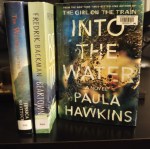
Into The Water


Rating:
 ⭐⭐
Author: Paula Hawkins
Genres: Mystery, Thriller
Read: May 2017


I enjoyed The Girl on the Train, definitely not as much as it seems everyone else did, but in my opinion Into the Water was a mess.

There are so many different viewpoints and characters in this book, but Hawkins barely does any of them justice. I don’t mind large casts of characters when they’re done right, but it was extremely hard to follow from the beginning and I didn’t find the story compelling.

Into the Water is a story about Beckford’s violent history of being a hotspot for women who commit suicide in the river. It opens with mother Nel Abbott, a woman who has always been intrigued by the women who have died in the river, showing up dead after having thrown herself off a cliff. There are questions about whether this relates to the earlier suicide of Nel’s daughter’s best friend and a huge cast of related characters emerges to narrate the story.

Like I said, I didn’t find the premise of the “suicide river” very compelling, it’s pretty obvious that some of these deaths weren’t actually suicide, and I thought the whole novel was poorly executed. The red herrings seemed obvious to me and I found the pace of the novel very slow.

Overall, most of the characters were unlikable. I don’t have a problem with unlikable characters as long as they’re compelling, but these weren’t. I thought Nickie and her sister added very little to the story, as did Josh. I felt like Louise and Helen could have both been interesting characters, but since we had to share their plots with a dozen other characters, they felt pretty flat to me and were lacking development.

I did enjoy Jules and Lena, but Lena’s character development was pretty lacking as well, leaving Jules as the only character that I thought showed any growth. Jules is Nel Abbott’s sister and they had a falling out 20 years previously over a shared misunderstanding. I thought it was a good portrayal of how things that happen to us as children can colour our entire life view and create family rifts that seem impossible to heal.

Anyways, I liked, didn’t love, Girl on the Train, so this was a definite step down for me, but I’m sure it’s still going to get lots of hype. I wouldn’t recommend.

What Happened


Rating:
 ⭐⭐⭐⭐⭐
Author: Hillary Clinton
Genres: Memoir, Non-Fiction, Feminist
Read: Sept. 2017 on audiobook


Last year I attended a panel discussion featuring female leaders in STEM and one of the women said something which has been particularly memorable for me. She spoke about how being the first woman to do something means nothing if you don’t pave the way for those behind you.

Hillary talks a lot in this book about being the first female presidential nominee. After a while I kind of just wanted to roll my eyes, but you know what, women are never allowed to celebrate their accomplishments. We’re told to be humble, not to brag, and we’re perceived as vain if we talk too much about ourselves. Hillary has had many, many accomplishments and she should be able to talk about and celebrate those successes, especially in the aftermath of such a devastating loss.

Hillary was the first. But please God don’t let her be the last. I’m not even American and I was totally devastated when she lost. It was heartbreaking to watch America tear down the first candidate to ever look like me. It was terrifying that nearly half of Americans (Hillary still won the popular vote, yo) would rather have a man who incites violence and hatred as their president than a *gasp* woman!

“But her emails” – I can’t even really talk about the emails because they really are just a stupid excuse for people to hide their misogyny behind and Hillary is right when she talks about how her emails were given way too much media attention in the election. If you think her emails are worse than any of the million offensive things Trump said and did, then you need to check your privilege and priorities.

So yes, Hillary was first, and as upsetting as it was to see her lose, I do think she has tried to pave the way for those behind her. She went into more detail than I cared to know on parts of her journey and parts of the book got repetitive towards the end, but I really enjoyed hearing about all the people she met throughout her campaign and how she worked with those people to draft her policies. I was particularly moved by the group of mothers that she met with to draft her policies on gun violence. She met with the mothers of black men, women, and children that have been killed by law enforcement, such as Tamir Rice and Trayvon Martin. These women formed their own coalition and campaigned with her on the road as she took on the NRA.

I was so inspired by some of the people Hillary met and worked with and I just kept thinking how awesome women are and I appreciated Hillary for shining a light on all these amazing individuals. I love that woman are taking all the insults Trump throws at them and using them as tools for empowerment. Call Hillary a nasty woman? Fine, we’ll turn it into a meaningful awareness campaign. Enact a gag order on organizations that provide abortions and try to take away our reproductive freedoms? We’ll march in the damn street.

I loved the parts of this book that Hillary devoted to talking about what it means to be a woman in politics. How she struggled to communicate in a way that wasn’t considered “offensive” for a woman. I struggle with this myself. I am passionate about equality and a lot of things make me frustrated and angry. It’s hard not to talk about them without becoming animated. When women get impassioned about things society calls them “angry” or “shrill” – whereas men are “passionate” or “charismatic”. I knew that Hillary had to act a certain way in front of the cameras. It’s so obvious at the debates that she’s putting in an effort to always be smiling and keep her voice even and soft. But it’s so damn frustrating that women can’t speak out in the way that they want because they run the risk of being labelled an “angry woman” and therefore someone who can be dismissed.

I was fascinated when she talked about her rallies and how high the energy of her crowds would be. She wanted to go out there and match the energy of the crowd, to be loud and passionate, as any man would be (seriously, think of any moving speech given by a man, they’re always loud and expressive). But she couldn’t because that’s not what people expect from a woman. Women should be able to express their passion in the same way that men do. Women should be able to show outrage without being labelled “angry”. Hillary had to work so much harder than any male nominee because she had to be so critical of every tiny thing she did and said lest she be perceived as too masculine or too feminine.

I’ve read a lot of criticism that Hillary blames Bernie for her losses in this book, but I did not find this to be the case. She mentions Bernie a few times and there is 1 or 2 (of 97!) chapters that focus on her experience running against Bernie. Of course she’s going to talk about Bernie, he was a huge part of her experience and of course she’s going to have some criticism, they ran against each other and on different platforms. Of course she feels differently than Bernie. But I don’t think it’s fair to say she blamed Bernie. She is very critical of herself in parts of this book and repeatedly blames herself for her loss and for the all the women she feels she let down as a result. She talks about the mistakes she made and the things she wishes she’d done differently.

I also loved that she talked about her policies. She is right when she talks about how little media attention her political agenda actually got during the election. Everything was focused on her emails or whatever new offensive thing Donald Trump had done most recently. I liked when she talked about fairness in reporting. In journalism you often want to remain unbiased and present both sides of the story, but this does not work when one of your candidates makes a mistake about how she sends and stores her emails and the other candidate is a sexist, racist, xenophobic menace who can’t complete a single sentence without insulting at least 3 minorities (or who honestly just can’t complete a sentence, period).

You can’t talk about Hillary’s emails in every single newscast and treat them like they have the same gravity as all of Trumps transgressions just to keep things equal. It is unfair and irresponsible. It was like Trump could do no wrong because no matter how many insulting things he said and lies he made up, the media always compared it to one of Hillary’s mistakes (ie, emails emails emails). And the media let Trump dominate the news – no matter how much he shocked you, he was bound to surprise you again. The candidates platforms were rarely covered, which is a real shame because Hillary spent an incredible amount of time hosting round tables and listening to people in order to develop her policies. I loved that this book actually gave the chance to hear Hillary talk about her policies, even if we won’t see them come to fruition. It’s too bad they got overshadowed by the rat race of the election.

So what next? Hillary was first, but I do think she has tried to pave the way for those behind her. It was a brutal and devastating defeat, but she is still optimistic about the future, so I will try to be too. It would appear that this book can only be rated 1 or 5 stars on goodreads, so 5 stars from me because Hillary Clinton is a boss lady and she still inspires me.

“never doubt that you are valuable and powerful and deserving of every chance and opportunity in the world to pursue and achieve your own dreams.”


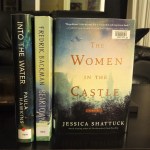
The Women in the Castle


Rating: 
⭐⭐
Author: Jessica Shattuck
Genres: Historical Fiction
Read: May 2017


This was so disappointing. Historical fiction is my favourite genre and I was really expecting to like The Women in the Castle, but it was a letdown. Maybe I should have read the synopsis more closely, but I thought I was getting a historical novel about the July 20 assassination attempt on Hitler from the point of view of the wives/widows of the resistance. This is not what this book was about.

Marianne is hosting a party at the Burg Lingenfels castle on the evening of Kristallnacht. In their outrage about this event, the male aristocrats in attendance decide to form a resistance against Hitler and name Marianne the “commander of wives and children”. She thinks this is somewhat patronizing at first, but later when the plot fails, comes to see it as a term of honour and importance. I still think it’s patronizing.

After the party the story jumps forward 7 years to the end of the war as Marianne attempts to track down any widows of the resistance (the plot having failed and their husbands all having been executed). She saves young Benita, the bride of her childhood friend Connie, from a Russian whorehouse in Berlin and Ania and her 2 sons from a displaced persons camp. They all move into Burg Lingenfels and try to rebuild their lives and escape the ghosts of their pasts.

This is pretty much the extent of what we learn about the July 20 plot – the rest of the novel jumps back and forth between the present and the past (but never focusing on the assassination plot). The format did not work for me at all and neither did the writing style. Evidently a lot of people loved Shattuck’s writing, but I found it very lacklustre and slow. The constant back and forth in time and the changing points of view made the story feel very disjointed. Ania’s past takes up a large chunk in the middle of the novel which felt very awkward in the pacing and the entire last quarter of the novel takes place in the 90’s.

That said, Ania was the only redeeming character in this book for me. I was interested in learning about the July 20 plot, but when I realized I wasn’t getting that I was hoping for a book about Germany’s struggle to return to normalcy after the end of the war and come to terms with the horrific details that came out about Hitler’s death camps. How did Germans move forward after discovering the extent of Hitler’s evil (which was unknown to many until the liberation)? What about former Nazi’s – how did they move forward? We’re they ashamed of their complicity in the halocaust?

I do appreciate that Shattuck offered a few different viewpoints on this dilemma. I did really like Ania and enjoyed her section of the story and how she grappled with the decisions she made during (and after) the war. However, I thought Marianne was insufferable and too uncompromising in her morals and beliefs. I didn’t understand why she was so revered and I didn’t like how her story concluded. Benita was irrelevant to me and I did not enjoy her story at all. I wish we’d had more time to get to know Connie, since he was so important to two of the main characters, yet without knowing more about him, I couldn’t understand what either Marianne or Benita saw in him.

So unfortunately this one isn’t getting a high rating from me because I found neither the writing nor the plot compelling. It had promise, but it didn’t live up to the expectation for me. It seems well loved by a lot of other people though, so maybe still worth the read?