The Hating Game

Rating: ⭐⭐⭐
Author: Sally Thorne
Genres: Fiction, Romance
Pub. Date: Aug. 2016 (read May 2022)

This is another book that it’s been a while since I read it, but I did put together a summary of my thoughts right after which is giving me a refresher. After reading The Spanish Love Deception earlier in the year, I knew I would eventually get to The Hating Game, which seems to be the most well known book with the enemies-to-lovers/fake-dating tropes. 

I was anticipating this would be better than TSLD, and in some ways it was, but to be honest, I thought it was still a lot of the same and had some tropes that I didn’t like. The Hating Game is about two publishing companies that merged and the relationship between the two executive assistants to the CEO’s. The CEO’s do not have an amicable relationship and Lucy and Josh have been rivals since they started working together. Now they’re up for the same promotion, which further escalates their competitive nature.

I don’t want to continually compare it to TSLD, because The Hating Game was written first, so I will say that a lot of TSLD seemed like a knock-off, but that I think the “enemies” part of enemies-to-lovers was better done in The Hating Game. I understood why these 2 characters didn’t get along and I believed it. It wasn’t believable in TSLD, which just made the main character look kind of dumb. But I’ll end the comparisons there and focus on The Hating Game.

To be honest, I thought this was a mess at the beginning. I was expecting to like it and I think the story did improve later in the book, but initially I really struggled to buy into anything the author was selling. The first third of the book felt extremely disorganized and I found some scenes jarring because they felt so forced. I felt like the author had all these romantic fantasies that she wanted to write and decided to include them whether they worked with the narrative or not. For example, I found the elevator scene a bit jarring – I know it’s now a pretty iconic scene from the book, but it felt very sudden and forced to me when I first read it. 

But the most notable scene for me was the corporate paintball retreat. I didn’t think it fit with the rest of the book. It wasn’t believable to me that a corporate company would sanction paintball for a team building event and the forced proximity with Lucy and Josh was just TOO forced. The whole “big man defending the tiny woman” trope is tired and felt out of place for 2 characters that supposedly didn’t like each other. I also found the whole scene where Josh takes care of Lucy when she’s sick extremely uncomfortable and unbelievable for two co-workers. A normal reaction would be “please let me call your friend or drop you at the hospital”, not “I’ll stay at your house for 2 days and get my doctor brother to make a house call”. They have worked together as rivals for several years at this point, but now they’re suddenly all over each other, all the time. I know that’s kind of the point of the book, but none of it felt natural or organic to me. 

While we’re on the topic, I’d also like to say that I am SO tired of the big man-tiny woman trope. It’s not even that I mind that all the male protagonists are tall, but authors seem to be obsessed with beating us over the head about just HOW tall they are. TSLD and The Love Hypothesis were pretty bad for it, but The Hating Game was really the most aggressive with the trope. Josh is 6 foot 5 while Lucy is 5 foot nothing – that is a huge difference! It just made Lucy seem like a child and I feel like it would honestly be more frightening than sexy. Plus, men don’t need to be giants to be attractive. 

So what did I like about the book? Because I seem to mostly be railing against it. Once I got over the chaotic start and the characters chilled out a bit, I actually got pretty into it. I do think that Lucy and Josh had great chemistry and Thorne does a great job at building up the sexual tension. Lucy and Josh are both pretty nuanced characters with strengths and flaws. I liked the exploration of Lucy working to gain more respect at work and her passion for her field. As well as I liked the exploration of Josh’s insecurities and his relationship with his father. He wants more from his relationships and I liked that he had this depth. There was a good balance of sexual tension without waiting until the very last minute for the characters to be together (drove me nuts in TSLD).

The last thing I will say is that there were some questionable behaviours throughout the book. Both characters are certified stalkers. The “I painted my room the colour of your eyes” was a hard pass for me and Josh has some questionable possessive behaviour that I didn’t like. Sadly these ideas seem to be a bit normalized in romance novels, but as far as the genre goes this was a pretty solid 3 star read for me. I did watch the movie and I liked parts of it, but would still give the edge to the book.  

Book Lovers

Rating: ⭐⭐⭐⭐.5
Author: Emily Henry
Genres: Fiction, Romance
Pub. Date: May 2022 (read May 2022)

It’s been almost 2 months now since I read this and I’m really regretting not writing a review about it then…

Emily Henry is quickly becoming an auto-buy author for me! I read People We Meet on Vacation and Beach Read earlier this year and am even debating reading some of her YA backlist. Of the 3 books I’ve read, I think Book Lovers might be my favourite! Beach Read had some definite flaws, but I really liked the friends to lovers aspect of People We Meet on Vacation. The plot of Book Lovers sounded a bit cheesy to me, but the story is so well crafted that I ended up loving it!

Nora Stephens is a literary agent for authors and has a tenuous relationship with Charlie Lastra, an editor who once passed on one of her biggest client’s bestselling book. Nora’s sister Libby convinces Nora to join her on a getaway to the small town in which her bestselling book is set, where they continually run into Charlie and learn the real reason why he passed on editing the book. But what Nora’s more curious about it why her sister really wanted them to take this trip and has a sneaking suspicion she won’t be very pleased when she uncovers the truth.

So the book has a pretty standard romance setting and plot, but what makes it stand out is the dialogue and characterization. First off, this is really a story about sisterhood, which is one of my all time favourite themes, and the romance that blooms during the sister trip is super organic and fun. Nora and Charlie have chemistry and I was really impressed with all of their banter. Emily Henry is quick witted and her dialogue is sharp. There’s no awkwardness and it’s a lot of fun to read. Like most enemies to lovers stories, Nora and Charlie are barely enemies, but I liked how quickly they become friends. There was an authenticity in easily sorting out your differences and acknowledging that your first impressions were misplaced.

I’ve said this of Henry’s other books, and it holds true in Book Lovers, that she is really great at bringing a strong dose of realism and depth to her romances. There’s always something going on in the story beyond just the romance and her characters are always realistically flawed, but in a way that is believable. Too many romances feature unrealistic men and while it’s nice to dream such a “perfect” man might exist, I like my love interests a little more nuanced.

What I liked about this one was that Nora and Charlie were very much the anti-heroes. Nora believes that she’s the high-powered, but lonely woman that always gets left behind in the city for the easy-going country girl, whereas Charlie’s the guy who always puts other people’s needs and happiness before his own. I loved that this book was basically in defense of all those women who like city life and pursue their careers over love. It’s about knowing who you are and what you’re willing to compromise.

As a side note, I’d also like to say that I loved that Nora was tall! I feel like almost all romances these days feature giant men and tiny women and I loved Henry’s exploration of height in a relationship and how little Charlie cared about it. The whole line about “there’s no such thing as a ‘too tall’ woman, only men who are too insecure to date them” had me swooning over Charlie! So I appreciate the realism since the average height for men and women is 5’9″ and 5’4″.

Then there’s a whole other element of this story that looks at Nora’s internalized guilt and responsibility. She’s taken on a lot of ownership over her sister’s happiness and this is very much about learning to let the people you love go. Letting them be responsible for their own success and happiness and being okay when your dreams don’t necessarily align with one another.

To conclude, I really liked it and read the entire thing over the span of 2 days. If you’re looking for a fun summer read, definitely pick up Book Lovers! 

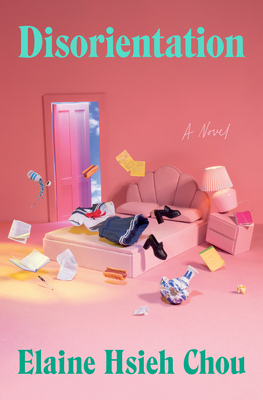
Disorientation

Rating: ⭐⭐⭐⭐⭐
Author: Elaine Hsieh Chou
Genres: Fiction
Pub. Date: Mar. 2022 (read Apr. 2022)

I was largely drawn to Disorientation by the cover art and then when I read the synopsis and saw buzzwords like “hilarious”, “satirical”, and “chaotic”, I was easily convinced I needed to read it.

I’m so glad I did because I am entirely blown away by this book! Not only could I not put it down, but I am in awe of how clever and thoughtful and funny the writing is. This is absolutely not a book for everyone and I could see how some people would very easily not like it. But everything about the insane plot and characters works so well for me and I know I will be thinking about it for a while.

Disorientation is told from the point of view of Ingrid Yang, a PhD student in her 8th and final year. Ingrid is working on her dissertation, but feeling thoroughly bored and uninspired by the whole thing. She’s a Taiwanese-American student in the East Asian Studies Department and has spent her entire academic career studying the poems of Xiao-Wen Chou, America’s most lauded Asian-American poet, and a previously tenured professor at her alma-matter prior to his death. However, when Ingrid digs deeper into some comments she finds written on her notes in the Chou Archive, she investigates and makes a truly shocking discovery.

From there the novel plunges into chaos, using humour and satire to highlight the plight of the Asian-American woman, the concept of freedom of speech, and the idea of the melting pot in American culture. Elaine Hsieh Chou masterly crafts the plot and the characters around her exploration of race and culture, presenting a very nuanced look at identity politics. It’s a very smart book, to the extent that I find it hard to articulate what the author is able to accomplish with this kind of writing style. She takes every scene and idea and pushes it just to the brink of being unbelievable, but the extreme just serves to highlight how ludicrous some parts of our culture and society really are.

It’s a political book, but it’s made so much more nuanced by our protagonist being against political correctness and dismissive of activism. She doesn’t realize the extent to which she’s been indoctrinated into white nationalism and initially, her internal monologue might serve to make white readers feel at home or more comfortable in her thoughts. But as Ingrid has her own self awakening, so too should the reader. Several of the goodreads reviews I’ve read mention that readers that aren’t female Asian-Americans probably won’t like this book, but I think that’s part of what makes it so brilliant. Of course Asian-Americans will relate to this more than any other individual because of the representation, but I loved the way Chou presents conflicting viewpoints and takes us on a journey with Ingrid. She didn’t have to present her ideas that way, but I think it makes this book so much more reflective than it would have been otherwise. 

Often protagonists come into the story with their politics mostly fully formed, as a pretty liberal person, it’s easy to come into a liberal story and relate with the character’s politics. But the conflicting politics between Ingrid and Vivian served to present a much more thoughtful exploration. I feel like I got to walk a mile in Ingrid’s shoes and I liked the way this challenged my thinking. It doesn’t present a simple black and white scenario for the reader and I liked going on that journey with Ingrid.

This is really satire at it’s best and I loved the juxtaposition Chou creates by going to such extremes with each of her characters. I’ve read other reviews complaining about how awful Michael is, but my friend, is that not the entire point?! He goes to the complete extreme – it’s completely unbelievable, and yet, somehow a bunch of white people screaming about the defense of freedom and wearing merchandise broadcasting an oversimplified 4-letter acronym could not be more relatable and terrifying. This is the world we live in.

Likewise, other reviews complain that the narrative becomes too unhinged towards the end of the novel, to which I agree, but also, given the rest of the story, I really couldn’t see this book ending any other way. It’s not a very satisfying ending, but sadly, it’s one of the most believable parts of an unbelievable story. Institutions will continue to go on operating in much the same way they always have, which begs the question, what can we ultimately do to change them?

Honestly, this book has so much depth I could expand on so many more elements. The discussion of yellowface; Ingrid’s exploration of fetishes and how power and privilege tie into how we perceive them; the satirization of academia; and everything about Vivian, who is the perfect foil to Ingrid. Every character is so imperfectly, perfect. But I’ll end my review here and just encourage you to go read it instead. It’s not going to be for everyone, but it was a perfect 5 stars for me. My favourite book of 2022 thus far!

Portrait of a Thief

Rating: ⭐⭐⭐⭐
Author: Grace D. Li
Genres: Fiction
Pub. Date: Apr. 2022 (read Apr. 2022 on Audible)

I’ve seen Portrait of a Thief popping up a few places, but for some reason I wasn’t very interested in it until I learned it was being published under Tiny Rep Books, which is Phoebe Robinson’s publishing imprint. I love Phoebe Robinson, so I took another look at the synopsis and discovered it’s about a heist and is actually fascinating! The museum heist vibes reminded me of The Feather Thief, which is non fiction that I read a few years ago and really liked, so I decided to pick up the audio version of Portrait of a Thief and quickly devoured it over one long weekend.

The comparisons to The Feather Thief pretty much end after the words “museum heist”. Portrait of a Thief is a fictional account of a 5 person crew of Chinese-American university students who decide to try and steal back a bunch of Chinese Art that has been taken by western countries throughout history as part of the spoils of war. It begs a very interesting question about art and museums and who should really be the keeper of history. The historical narrative and record has always been determined by the victors of war and colonialism, but in more enlightened times, should we re-examine who the purveyors of those artifacts are in a modern world?

This is the biggest theme raised within the book, but we also get to know 5 protagonists of Chinese ancestry and get to explore what it means to be both Asian and American – to belong to multiple identities, but to struggle to access either. Art frames the plot, but it’s really a story about diaspora.

I read this immediately prior to reading Disorientation by Elaine Hsieh Chou, and though I really liked Portrait of a Thief when I read it, I’m struggling to review it now because Disorientation attempts something similar but totally different. Both books are a lot of fun and also slightly insane, but they are too entirely different beasts, so it’s unfair to compare them. Portrait of a Thief doesn’t strike me as such a strong read having finished Disorientation, but I’ll do my best to review it justly.

The element of fun in Portrait of a Thief comes from the heists. Its ludicrous to think of a bunch of university students robbing some of the most prestigious museums in the world, but after having read The Feather Thief, I have to conclude that it’s definitely possible, especially if you have limited connections to tie you to the crime. Without concrete DNA or video evidence, how are you really going to get caught as long as you make it out of the building before the cops arrive? (it’s probably a lot more complicated than this, but I can hypothesize).

I also liked that Portrait of a Thief has 5 very different, but interesting characters. I loved the exploration of the Chinese diaspora, but I have to admit that none of the characters really had as much characterization as I would have liked. It’s a great book, but beyond the initial presentation of the main theme – who owns art – I found the author didn’t actually explore the idea in as much depth as I would have liked. She doesn’t fall into the trap of telling instead of showing, which I always applaud in a debut. The reader is left to consider their own conclusions, I just wanted a little bit more meat to chew on while I contemplated this.

The characters, though interesting, were sadly a bit one-dimensional. The audiobook was well narrated, with the exception of how the male narrator read the female characters. I despised how meek and breathy he made the women sound and it really bothered me. They had both a female and male narrator, so I don’t understand why they didn’t just have the female narrator read the dialogue in the male narrator scenes. Furthermore, I wish this book had had 5 narrators, one for each character. I know this probably complicates production and budget, but I think it would have taken this audiobook from good to great.

Anyways, despite my complaints, I do think this is a very strong debut novel with an excellent premise. It’s not perfect and I’m definitely nitpicking having followed it up with Disorientation, but still a great book and I would recommend!

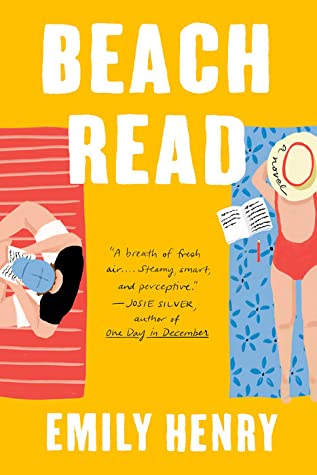
Beach Read

Rating: ⭐⭐⭐⭐
Author: Emily Henry
Genres: Fiction, Romance
Pub. Date: May 2020 (read Apr. 2022)

I read and loved People We Meet on Vacation earlier this year, so I was excited to pick up Beach Read this month. The two books together have firmly cemented Emily Henry as a “auto buy” author and I’m looking forward to her 2022 release, Book Lovers, coming out next month.

The two books are rated almost the exact same on Goodreads, but most people I know that have read both preferred Beach Read. I kind of wonder if it matters which one you read first (everyone seems to love their first pick), because as much as I liked this one, I did still like People We Meet on Vacation better. I feel like friends to lovers is an underdone trope (enemies to lovers seems very on trend these days, at least according to Booktok), so that’s why I liked People We Meet on Vacation so much.

I must conclude though that Emily Henry (or her publisher?) is not very good at naming her books. Beach Read and People We Meet on Vacation are both kind of misnomers to me, what are we actually going to get in Book Lovers? A book bonfire? But I guess I can overlook it because I love her approach to romance writing. Both are very much romance books, but they have a lot going on for them beyond just the romance. Plus the smut is limited, which some people will like and others won’t, but for me it just helps to present the book as more than simply a romance.

Anyways, let’s talk about Beach Read. It was quite emotional for what I thought was going to be a light read. Our protagonist, a novelist by the name of January, is reeling after the death of her father and the realization that he was living a double life. She decides to spend the summer in his secret beach house to write her next book while cleaning it out to sell. The problem is that she is a romance writer and with the disintegration of her relationship, along with the death of her father, she’s feeling a little low on inspiration.

Along comes Gus, another writer trying to pen the next great literary novel. The two decide to trade genres and Gus attempts romance while January makes a run at literary fiction. Of course drama ensues as the two get to know each other better and address the pre-conceived notions they had about one another.

I liked it – it’s fun and thoughtful, though ultimately a bit forgettable. I would love to know what kind of literary fiction these two are reading though (or Emily Henry is reading), because I read A LOT of lit fic, and nothing either of these two characters proposed sounded anything like lit fic to me. Gus’ cult family drama sounded more like mystery or horror, while January’s circus saga belonged somewhere in the historical fiction genre. But I guess they’re both literary in their own way, I just gravitate to contemporary lit fic I suppose.

On another note, it just about killed me when these two went off into the wilderness in street clothes. Thank goodness Gus knew what he was doing and brought a tent, but as an avid backpacker, it was high-key unbelievable to me that these two wouldn’t have spent a freezing, soaking wet night in the tent with only one blanket. Trust me, in reality it’s not quite the romantic scenario you’re envisioning. But I guess I live in a much colder climate, so what do I know?

Anyways, I’m going off on a lot of tangents because I don’t really have a lot to say about the book overall. It’s fun and sexy, it has emotional depth, but it didn’t sing to me the same way People We Meet on Vacation did. January and Gus are two complex individuals, but they did both have a lot of shit to work out, although I did like that it wasn’t a “ride off into the sunset” type of ending. I feel that Emily Henry’s romances have a strong dose of realism in them and I think that while this wasn’t quite as strong a novel for me, it’s what will keep me coming back to her books. 4 stars – a solid read, despite there being no actual beach reading to speak of in this book.