We Are the Brennans

Rating: ⭐⭐
Author: Tracey Lange
Genres: Fiction
Pub. Date: Aug. 2021 (read Sep. 2021)

I was so stoked for this one, but it turned out to be such a disappointment. It’s an easy read, with the flow between chapters being pretty smooth, but I wasn’t really a fan of the writing style. It was pretty simplistic, which is fine, but I feel like this has been marketed as literary fiction and I just didn’t see it.

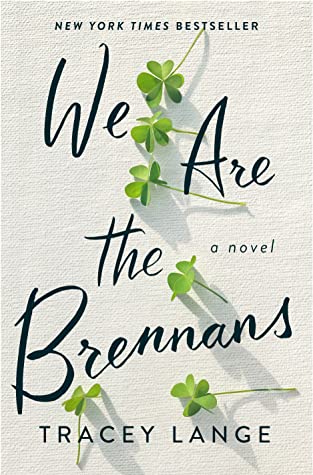
We Are the Brennans tells the story of the Brennan family and their life in an Irish suburb of New York. I’m sure you guessed it from the cover, but the Brennans are Irish and as such, had a pretty conservative Irish-Catholic upbringing. Everything seemed to be going great until Sunday Brennan up and left 5 years ago and the family started falling on tough times. But now Sunday is back and the entire Brennan Family are forced to face the secrets of their past.

I live for family dramas, but this one just didn’t work for me. Aside from disliking the writing style, I thought the entire plot was predictable and pedestrian. I disliked almost all of the characters, which isn’t usually enough for me to dislike a novel, but I felt like everything in this book was overly dramatized because in reality, the author didn’t have that great a storyline. I feel like she had somewhere she wanted to take this story, but it was so poorly executed. It had a lot of the pitfalls of a debut novel in that Lange had a lot of ideas and no idea how to tie them all together in a meaningful way.

But mostly I think I just disagreed with her central themes. She had a lot of ideas about family and shame and I struggled to agree with any of them. I’ll get into the details in the spoiler section of the review, but by the end of the book I couldn’t help but acknowledge that me and Lange are just not on the same page. I feel like this Irish immigrant space is something that she knows really well, and maybe other Irish immigrants in NY might be able to relate more, but I also grew up on an island full of Irish immigrants and I felt that she really romanticized the Brennans in an unhealthy way. The book is all about family, but I thought every member in this family was toxic. She kind of tries to acknowledge this towards the end of the book (via Vivienne), but then she’s just like “sod it, they may be toxic, but they all love each other, so it’s fine”.

Anyways, it’s hard to really get into it without spoilers, but a lot of this book hinges on the reveal of a big secret about halfway through the book and this is where it all went downhill for me. I thought the secret was so problematic and that the author had so many blind spots about it that I just couldn’t move past it. So for me this book was a big miss. It’s still a somewhat entertaining read, but I wouldn’t recommend it – there are so many better family dramas out there – skip this one.
.
.
.
.
.
Okay, now for the spoilers. There were two parts that killed this book for me – the “secret” reveal and the ending. Let’s start with the secret.

So the big secret is basically that Sunday got drunk one night when her family was in Ireland and the bartender tricked her into coming up to his room with him. He comes on to her, she leaves, and then he pushes her down the stairs and leaves while she bleeds from a miscarriage.

This scene is so traumatic for her that she leaves New York for 5 years because she can’t bear to tell her family. She is obviously traumatized, embarrassed, and ashamed by the incident. We had an interesting discussion about this secret at book club because we thought it was silly that she didn’t feel she could tell anyone about this. She didn’t do anything wrong and her family should really only feel sympathy for her. In the long list of things that could have gone wrong for her as a woman, we felt like maybe this wasn’t the worst case scenario, the trap of “it wasn’t really that bad”.

This is the one part of the book Lange gets right. Any situation that harms a woman physically or mentally is “that bad”. Society has a tendency to create an unfair hierarchy of trauma, which only results in silencing a lot of women. I read a whole anthology about this concept (Not That Bad by Roxane Gay) and I did really like that Lange never belittled the trauma that Sunday felt from this incident.

What I didn’t like was how it all played out. Because the real reason Sunday feels she can’t tell any of her family members is because she thinks they’ll literally go out and kill Billy, which turned out to be a pretty damn justified fear. So she doesn’t tell anyone out of the fear of how they will react. Sure, it plays into her catholic upbringing, but it drove me crazy that she underwent 5 years of self-imposed exile over how someone else might react to her pain. So she not only takes ownership of what happened to her, but she takes on the added responsibility of what her brothers might or might not do in their anger.

Now I know women do this all the time – take on the responsibility of other people’s actions, but I’m f*cking sick of it. Lange could have taken this whole ordeal and written something really meaningful and healing about it, but instead she takes a woman’s pain and uses it for drama. There are several instances of victim blaming where both Sunday and Kale (maybe Denny too?) think that she had too much to drink, indirectly blaming her for Billy’s actions. There’s some exploration of how the ordeal was traumatic for Sunday, but I don’t feel like Lange ever explores that in any depth. Sunday’s assault is simply used as a lazy way in which to create this time and space between her characters and to spurn on the actions of the rest of the book’s male characters. I detest when assault is used solely for drama and the motivations of other characters and try as I might, I just couldn’t look past it throughout the entire second half of the novel. Denny, Mickey, and Kale are all toxic characters and the fact that they “love” Sunday doesn’t excuse them all going out and being violent assholes about it. In fact, it’s so toxic, her fear of it drives her away from them for 5 years.

Which brings me to my second point – the ending. So Kale leaves Vivienne even though he knows the Brennans are all toxic and liars (but their “his” liars, AWWW), and everyone seems to finally be moving forward, acknowledging that as a family they can band together and support one another because that’s what families do. But then we find out Mickey actually murdered Billy (which was also super predictable), and they’re just like, “oh…. but it’s okay, we’ll get through it together like we always do”.

I’m sorry, but what kind of messed up theme is that. What a way to end your book, with a family condoning and shielding a murderer – yeah, that’s exactly the kind of message I want to take with me from this book! If this was a thriller, sure, but it’s not and it doesn’t fit. I feel like Lange just places the Brennans on this pedestal and because of her proximity to the subject matter, she can’t see what kind of bias she brings into this story. Love doesn’t excuse your actions. You show love by showing up for your family members and creating safe spaces for them. If the theme was about surviving these kind of toxic behaviours it would be great, but this book only condones them.

Anyways, there’s other things I didn’t like (namely the treatment of Vivienne), but I feel I’ve ranted enough. Obviously I didn’t like it and I like it even less now that I’ve taken the time to vocalize why I didn’t like it. I’m honestly blown away by how many high reviews this got on goodreads. I feel like I missed something, maybe I did, but I’m still done with this book. Good riddance.

Luster

Rating: ⭐⭐
Author: Raven Leilani
Genres: Fiction
Pub. Date: Aug. 2020 (read May 2021 on Audible)

It’s been too long since I read this for me to write a proper review for it, but I do want to write a short one to capture my thoughts.

I saw lots of buzz about Luster and read that it was a bit of a polarizing book. It was compared to Queenie, which is also somewhat of a polarizing book, but I read it several years ago and loved it, so I thought I might enjoy Luster as well. Sadly, I did not. I can see why this is compared to Queenie, but in my opinion it had none of the charm of Queenie.

Both books feature black women trying to find their way in the world while simultaneously combatting racism and micro-aggressions at every turn. Both women pursue (often abusive) sexual relations to avoid their personal trauma, but that is pretty much where the comparisons end. Despite Queenie raging against herself and looking for love in all the wrong places, she still had so much charm and spunk. A lot of people didn’t like the comparison of Queenie to Bridget Jones, but I actually thought it was pretty apt. Queenie struggled with her mental health, but she very much used that wry British humour as a coping mechanism.

Luster is a different beast than Queenie entirely. Queenie was trying to mend her broken heart with bad sex, whereas Edie pursues an entirely inappropriate relationship with an older white married man. Eric has a somewhat open marriage and when things fall apart for Edie, she finds herself living in Eric’s house with his wife and discovering they have an adopted black daughter.

While I did find the exploration of Akila’s character (the daughter) really interesting, a black girl fighting the same racism Edie is used to, but without the acknowledgement or understanding of her parents, this novel made me entirely too uncomfortable. I get that that’s kind of the point of the book, but the casual violence in Edie and Eric’s relationship, and the bizarre relationship with his wife, were just too much for me to handle. I desperately wanted to like it because I generally love books with unlikeable characters, but I had to acknowledge this book wasn’t for me.

I didn’t enjoy the writing and despite some good themes, I wasn’t quite sure what Leilani was trying to say with this book. I acknowledge this book wasn’t written for me though, and that’s okay. But given the choice between the two, read Queenie instead.

Of Women and Salt

Rating: ⭐⭐⭐⭐
Author: Gabriela Garcia
Genres: Fiction, Historical Fiction
Pub. Date: Mar. 2021 (read May 2021)

I have read some really good books this month and Of Women and Salt is definitely one of them. I’ve been seeing a lot of buzz about it over the past few months but I couldn’t quite pin down what the plot was. I gathered it was a multi-generational immigrant story and honestly, I didn’t need to hear any more, I was sold. 

We put this on our book club voting list and it lost to The Lost Apothecary, which is really too bad because I think my book club would have enjoyed this a lot more than they enjoyed The Lost Apothecary. This book is centered around women, primarily the relationships between mothers and daughters. It’s another story that is told non-linearly (seriously, I’ve read so many of these this year), but this is one of the books where I didn’t mind the non-linear telling. Overall the plot is pretty simple, so I didn’t find it difficult to jump around as the novel focuses more on the character relationships than anything else. 

The novel kicks off in 19th century Cuba and then jumps around from there. Though someone from almost every generation of this Cuban immigrant family are featured throughout the novel, most of our time is spent close to present day with the youngest woman in the family, Jeanette. When she witnesses her neighbour being taken away by ICE in the middle of the night, she inadvertently becomes guardian to her neighbour’s daughter for a short period of time. Though they only know each other for a few days, the experience has a profound impact on both Jeanette and the young girl, Ana. 

I’m glad the novel focused on these two individuals because I did find their stories to be some of the most memorable and meaningful of the book. Though I did love the development of both Jeanette’s relationship with her mom (Carmen), and her Mom’s relationship with Jeanette’s grandmother (Delores). Beyond Delores, I don’t think going further back in the family tree really added that much to the story. The inclusion of the family tree at the start was definitely a good idea, I could see this being really confusing otherwise.

Some might question how much Ana and her mother’s story really belonged in this book, but I loved the comparison of two different immigration stories and though they are only loosely linked to one another, I thought the inclusion of both really made this a more well rounded story. 

Honestly, my only complaint about this book is that it could have been longer. It’s only about 200 pages and I really would have loved to spend more time with each of the women in this family, particularly Carmen. I felt like I had good insight into Dolores’ perspective, but I would have loved to hear more about Carmen’s experience immigrating to America and what it was like growing up under the shadow of her childhood trauma. Abuse was passed down from generation to generation in this family and I think that Garcia could have really developed this theme more to make her narrative even more impactful. I just wanted a little bit more from each of the characters, but the writing was so beautiful I’m definitely excited to see what the author will write next. An excellent debut!

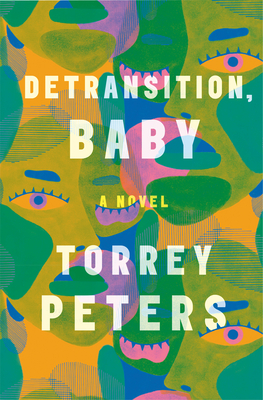
Detransition, Baby

Rating: ⭐⭐⭐⭐
Author: Torrey Peters
Genres: Fiction
Pub. Date: Jan. 2021 (read May 2021)

This is going to be a hard review to write. It took me a long time to read Detransition, Baby; not because it’s a bad book, but because it’s a heavy book in scope. As a character study, this book is incredible. Peters really gets into the psyche of her main characters and I was frankly astonished at the emotional depth to which she takes Reese and Ames. These are not hastily created characters, they are well developed individuals and Peters brings to life every aspect of their character, from their most trivial thoughts, to their deepest secrets. Don’t come to this book if you are looking for a fast-paced plot, but rather if you want to get down into the nitty gritty of what it means to be trans and the exploration of both womanhood and motherhood as a trans-woman, this is the book for you.

It’s what made it so hard to read. The plot is not told linearly and the book is chaotic in its exploration of the themes and who these people are. Peters goes to some dark places and this is not a lightweight book. For those not aware of the plot, Detransition, Baby is primarily about two characters, Ames and Reese, though Katrina also plays a central role in the story. Reese and Ames were in a relationship for many years, but Ames eventually decides to detransition back to male and accidentally impregnates his boss, Katrina. The novel explores the idea of these 3 individuals raising the baby together because Ames fears that Katrina will not understand why the idea of ‘fatherhood’ is so scary to him and because Reese is a trans-woman that has always wanted a baby.

It’s a messy book and I can see it being very polarizing. But the fact that it’s been creating so much buzz and making bestseller lists from its release is in itself an achievement. The danger I think may be that this is held up as the only example of what it means to be trans, so I hope to see many more books like this get published to both broaden the narrative, and of course, for representation. Although shoutout to the YA genre which I think has been ahead of literary fiction genre on this topic. 

There are so many ideas presented in this book that I did find myself finishing it and not knowing quite what to think. I’m still not sure if I loved it, but I can’t deny its power because I really can’t stop thinking about it and I appreciate Peters’ unapologetic telling of these individuals. This is ultimately a book about womanhood and motherhood and what it means to navigate those worlds as a trans-woman. Peters explores so much within a limited number of pages and I definitely commend her on her honesty.

My only complaint is that I wish this story had been told linearly. I’ve read a lot of non-linear stories lately and for the most part, it doesn’t bother me – but I’m not sure what this style achieved in this book. The chapters are very long and every time I finished one, I knew I would be jumping to an entirely different part of the story, so it made it hard to pick the book up again every time I put it down. I felt like I had to get re-invested in the story after every chapter because the storytelling itself was quite chaotic. 

But one thing is for sure – whether you loved it or hated it, Torrey Peters is definitely one to watch!

What’s Mine and Yours

Rating: ⭐⭐⭐⭐
Author: Naima Coster
Genres: Fiction, Historical Fiction
Pub. Date: Mar. 2021 (read May 2021 on Audible)

This was an impulse buy because I liked the audiobook narrator. I always have such a hard time finding audiobooks because I own so many hard copies of the books on my TBR and I don’t want to pay for them twice. I’ve seen a bit of buzz about What’s Mine and Yours, but I wish I was seeing more because this book was excellent! Honestly, I don’t know why this is only rated 3.67 on goodreads, I feel like it must be misunderstood because so many of the characters are unlikeable, but definitely a 4.5 star read for me.

Unfortunately the synopsis of the book is a bit misleading. The book is pitched as being about the lives of two students from North Carolina whose school is being forced to integrate. This is a small part of the story, but really this is a multi-generational saga about the families of those two students – the impact of their childhoods and their parents’ influence on who they become and how their lives continue to intersect throughout the years. It reminded me a little bit of Ask Again, Maybe because of the ripple effect that single circumstances can have on a person and on a family. In this case there’s not necessarily one catalyst so much as a series of events, but it still makes for a really interesting character study.

This novel touches on so many themes: grief, growing up, race, class, abuse, family, love. Gee grows up with his headstrong mother Jade, who wants the best for her son, but struggles to be there for him in the way he needs after a tragic incident. Noelle grows up under the shadow of her mother, a white woman who has been dealt her own difficult hand in life, but fails to recognize how her white privilege blinds her and creates a wedge between her and her half-Latina daughters.

With so much going on in the book, I did find it a little hard to follow by audiobook in the beginning. The author doesn’t use a linear timeline to tell the story, for a good reason understanding the surprising ending, but it did make it hard to follow at times. I think the strongest themes of the book are those of race and class, but Costa accomplishes a lot in under 350 pages. I didn’t love the ending, but I loved how this book is a character examination of these two families. The narrative isn’t proportionally split between all the characters, but by looking at each of the family members, we get to recognize the larger scope of the story. 

Lacey May was the most interesting character for me. I struggled with her character because she really doesn’t have any redeeming qualities. She’s blind to how her children perceive her and she’s not ashamed of her blatant racism. Despite her strong character, she fails to be able to stand on her own two feet, always relying on the men around her, and even as an old woman, she still uses the same old antics to manipulate her daughters. But she makes for an interesting character study because you know there are tons more women out there just like her. 

Unfortunately the plot is already getting hazy in my memory, but definitely recommend this if you’re looking for a nuanced and engaging story!