The Belles

Rating: 
Author: Dhonielle Clayton
Genres: Fantasy
Pub date: Feb. 2018 (read Jan. 2018 as audiobook)
Narrator: Rosie Jones
Series: The Belles #1

Where to start with The Belles? First of all, I listened to it as an audiobook and I really liked the narrator! She had a great tone for this book and she was really enjoyable to listen to. As for the content? I heard this book had teeth, but about halfway through I was wondering when it was going to start to bite. I wouldn’t call it a slow start because the story is still pretty engaging, but it’s a bit repetitive at the beginning and it wasn’t until the second half of the book that the story grew fangs. But boy does it ever get intense! Because of the start, I thought it was a 3 star read overall, but the author definitely steps up her game in the second half of the book and I’m really looking forward to reading the sequel.

The Belles is set in a beauty-centric fantasy world based on New Orleans, called Orleans (or-lee-on). People have become grey in Orleans and only a select few talented Belles can restore colour and make people beautiful again. The Belles power come from their personal arcana (unsure of spelling because I read as audiobook) and they can change anything about a person, from hair, eye, or skin colour, to height and weight, to bone structure, and even the well-being of internal organs. In this world, people are obsessed with beauty and must pay for beauty appointments. However, the changes don’t last forever and the grey will always start to creep back in, so the rich are always changing their looks based on the latest fashion.

Camellia Beauregard is one of 5 Belles coming of age this year. She has spent her whole life training to be a Belle and she will have one chance to present her powers to the Royal Family, who will pick one of the Belles to be their favourite. The Favourite will work for the royal family and their courtiers, while the rest of the Belles will be appointed to other beauty salons around the city. All of the Belles want to be named the favourite, especially Camellia and her sister Belle, Amber.

Once the Belles start working though, they discover that working as a Belle is not quite what they expected and start hearing about strange things happening in the salons. The Royal Family is also in a state of upheaval because the time is coming for the Queen to declare her heir. By rights it should be her older daughter, Charlotte, but she has been in a bewitched sleep for years and has never awoken. If Charlotte does not awaken, the heir will have to be her younger sister Sophia, and the more the Belles learn about Sophia, the more they fear the kind of queen she might be.

The Belles had a really interesting plotline in that it’s really not clear for a while where the story is going. There is a large mystery element to the story and because we don’t learn the full depth of the plot until later, there’s a lot of world building taking place in the first half of the book. Like I said, I didn’t dislike the first half of the book, I think that Clayton did some really good world-building and really delved in to some of the intricacies of the world she’s created. But the plot feels a bit nebulous after the favourite is announced and I thought there was a disproportionate amount of time spent on various beauty appointments and treatments. It was interesting, but I just wanted the author to get to the point.

But I can’t really fault her because the time spent on world building definitely paid off in the second half of the book. The second half is nasty! Things get really dark and pace of the plot picks up immensely. I liked the ending a lot because Clayton answers some of the more pressing questions and mysteries, but still leaves enough threads open to propel us into the next book.

Clayton addresses a lot of really interesting social themes in her book, which is what made it stand out for me. It’s obviously about beauty and how highly it is valued by society and how we assign value based on beauty. In many ways, beauty is a social construct and is very objective. In our own world, ideas of beauty differ greatly from country to country, but looking at North America, there are certain attributes we tend to value greater than others, thinness being the most obvious one that comes to mind. However, like Orleans, we are constantly changing our minds on other attributes. The one that comes to mind immediately for me is eyebrows. In the 2000’s thin eyebrows were all the rage, while now big eyebrows are definitely in.

I found it interesting that Clayton’s world features a monarchy, but women still tended to be de-valued. She draws attention to the different beauty standards that exist for men and women, but how men still want to look good too. However there is a sexual assault scene in the book and I found it really surprising that in a matriarchal society such as this, people still went out of their way to excuse men’s actions.

Finally, the villains in this book are top notch. There’s a lot of drama and several villains, with varying levels of, shall we say evil? Our number one villain is totally nuts and will get right up inside your head. She reminded me of Umbridge a little bit because it’s the perfect example of how smug and evil a bit of power can make some people. I really don’t know where Clayton plans to take this story in the next book, but colour me intrigued! I already have an ARC for the next book, which is being published in March, so I’m planning to start it very soon!
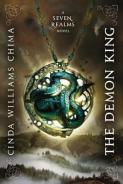
The Demon King

Rating: 
Author: Cinda Wililams Chima
Genres: Fantasy
Pub date: Oct. 2009 (read Jan. 2019)

I’ve had the entire Seven Realms box set sitting on my shelf for some time and I finally got a chance to pick up the first book. I’ve been hearing really good things about the sequel series, Shattered Realms, which has the final book coming out this March. For this reason, it was a bit intimidating to start this one because if I liked it, I was pretty much looking at an 8 book commitment.

But I’m glad I finally picked this one up off the shelf, because I did end up quite enjoying it. It has a pretty slow start, so it did take me a bit of time to get into it, but around the 100 page mark it started getting really interesting!

I really like the characters in this book. It’s set in a fantasy world that is split into seven different realms, many of which are at war with each other. Our characters live in the Queendom of the Fells and are not currently at war, but fear war from the other realms. Queen Mariana is the current ruler and the throne is always passed down through the female line. The Queen is advised by wizards, who are closely watched over by the clans, who fear the wizards having too much power.

Our main characters are Raisa and Han. Raisa is the Princess Heir of the Fells and is approaching her 16th name day, when she will start courting and accepting marriage proposals. Her mother, the Queen, is caught up in planning a huge party and entertaining the guests, but Raisa is more interested in flirting with cute boys like the young wizard, Micah Boyar, and catching up with her friend Amon, who has just returned from soldier training after 3 years away.

Han is a reformed street gang lord who used to run with the Raggers, thieving to survive. But in an effort to protect his sister and mother, he gives it all up for a more honest life – until he runs into Micah Boyar using magic in the wilderness and steals the amulet that gives him power. Han has little interest in the amulet, aside from taking away Micah’s misused power, but he starts to wonder if the amulet may have cursed him when he repeatedly starts running into trouble.

It’s a bit difficult to explain the plot because there is a lot going on, but it’s never really confusing. The world building is slow, so you do have time to get acquainted with it. The only thing I found a little confusing was some of the history. Historical events like the Naeming and the Breaking are referenced throughout the book, but I’m still not really sure what they are and I hope it will become more clear in the next book.

Once this book gets going though, it’s a lot of fun and that plot goes in some really unexpected directions. Han is cool, but Raisa was totally my favourite character. I thought she was so feisty and I loved how she was just kissing boys all over the place without really developing any lasting attachments. She wants to have fun, but she also genuinely cares about the wellbeing of her queendom. I really liked Amon and their friendship and was super intrigued by Micah and what his motives were. My favourite part of the book was when Raisa and Han interacted together in the middle of the story. I thought that whole section and plot line was so fast paced and interesting! I was a little disappointed when Raisa returned to the castle because I thought it brought the energy of the book back down and I wanted to maintain the fast and fun pace.

So overall, a few criticisms with pacing, but I thought it was a great start to the series and I have a feeling the next books will be a lot faster paced. It takes time in high fantasy books like this to introduce all the characters, the magic system, and the world building, so I’m expecting the story to pick up a lot faster in book 2. Hoping to knock out this whole series over the next month or two and we’ll see if I feel like continuing on the the Shattered Realms series at the end or not.

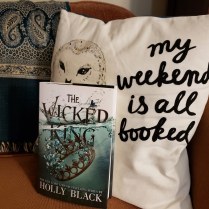
The Wicked King

Rating: ⭐⭐⭐.5
Author: Holly Black
Genres: Fantasy
Pub date: Jan. 8, 2019 (read Dec. 2018)
Series: The Folk of the Air #2

Thank you to Hachette Book Group Canada for providing me with a free copy of this book in exchange for an honest review. 

Unpopular opinion: I liked The Cruel Prince (3 stars), but I definitely didn’t love it and it was so hyped up it kind of left me wondering if maybe there was something I was missing not loving it as much as everyone else. The Wicked King started off much the same, with me wondering what the big deal was. I still kind of don’t understand the insane level of fandom that some readers have over this series, but I think I did like this book more than the first one.

So I was not really feeling this in the beginning, but then once I got about a third of the way through I thought it picked up a lot and I pretty much speed read through the rest of the book in 2 days. I think my biggest issue that I don’t particularly love Holly Black’s style of writing, but I may be the odd one out here. I said this about The Cruel Prince, and I had the same thought with this book, that I felt like I was reading a middle grade novel. The plot is so obviously NOT middle grade (it’s brutal), but something about the writing strikes me as a little immature. I’m not really looking for flowery writing in my fantasy books, but something about Black’s style is just a little to simplistic for me. That said, I have a feeling the writing may be one of the reasons other readers like this so much – it is definitely a different style of writing from most other fantasy books and the characters and plot read a lot different.

The middle grade feel ends there though because the plot is anything but middle grade. My favourite part of the first book was how unpredictable the plot was and Black definitely continued that theme in this book. I didn’t see any of the plot twists coming and I was continually surprised by where she took the story. It reminds me a little of Game of Thrones in that you really don’t trust that any of the characters are safe and that really anything could happen to them.

It’s definitely a political book and it does get a little confusing at times. I may have benefited from a re-read of The Cruel Prince before jumping into this book because I forgot some of the details about Faerieland and who was good and who was bad (although do we ever really even know? Everyone flipflops so much). I thought it got really interesting in part 2 of the book when we learned more about the sea kingdom and Cardan finally stopped being a little puppet king. I like that you never know which characters you can trust, even though it makes you want to pull your hair out sometimes. Plus I thought Jude was really clever when she was in the sea kingdom. You can tell she’s really struggling in the first half of the book to maintain any kind of power and it was kind of fun to see it all stripped away from her and see her still use her wits to succeed.

I liked that Jude and Cardan both grew a lot in this book. I’m still not entirely sure what the source of attraction is between them, but I was feeling it in the second half of the book. I think I liked Cardan’s development the most. He really came into his own in the second half of the book as well and I wanted to love him, but at the same time you can’t help but be weary of trusting anyone in this book. I still don’t really know what to think about him, even after that brutal ending. WHAT IS REAL?! It’s the perfect kind of ending though in that it’s not really a cliffhanger, but it makes you desperate for the next book. It reminded me a little of the ending of ACOMAF, which also has that perfect hook to draw you back to the next book without really being a cliffhanger.

On a side note, I don’t really get Taryn and Locke. They’re a mystery to me and I really don’t know what the hell Taryn is playing at (and Locke is like the world’s biggest ass). I think I may have to read the novella because I think that gives us some more insight into Taryn’s character.

I really wanted this book back in the summer when everyone was getting arcs, but I’m kind of glad that I didn’t get it until now because otherwise it would be a SUPER long wait to the next book. Plus Hatchette Canada was so kind as to send me a finished copy, which I really appreciate. It’s still not one of my favourite fantasy series, but it is fun and I will definitely be anxiously awaiting the final book.

The Wicked King will be available in stores on Jan. 8th, 2019

The Poppy War

Rating: ⭐⭐⭐⭐
Author: R.F. Kuang
Genres: Fantasy, Historical Fantasy
Pub date: May 2018 (read Nov. 2018)

Disclaimer: Spoiler Review

I’ve been postponing writing this review because I’m not quite sure how to rate or review this book. I read a lot of YA Fantasy and this was so different than everything else I’ve read, it was really refreshing.

The Poppy War falls into the historical fantasy genre. It is set in the fictional Nikan Empire, who has survived two Poppy Wars and is on the brink of a third war with the Federation of Mugen. This world is very much based off of China and Japan and the Second Sino-Japanese War. I think one of the reasons I’ve been postponing this review is because this is based on a conflict I’m not very familiar with and because I think that it’s important to recognize that the author did not write this book for me. I’ve heard that this book is super important and meaningful to many Chinese people and I think the author is really trying to be a voice for that pain in this book.

Because this is such a historically significant book, and there are a lot of plot elements I want to discuss, I can’t write a spoiler-free review for this book. So please don’t read any further if you’re trying to avoid spoilers for this book. In addition, I wanted to acknowledge S. Qiouyi Lu’s review that was posted on Barnes and Nobles website. Because I wasn’t at all familiar with the history behind this book, I had to do some research for this review, and her article was a great starting point for me and influenced my own review. Her review is also a great example of how this book may be more meaningful for Chinese readers and that I likely missed a lot of the cultural and historical context and nuances.

First off, I have to applaud Kuang for this book because it is extremely impressive in scope. It’s a 500+ page novel and I believe it covers about 5 or 6 years of plot. The story starts with our main character Rin at 12 years old. She is a war orphan who wants to prove herself by passing the Keju (national exam) and being accepted into Sinegard, the elite military school. The first half of the book follows the traditional fantasy format, with Rin acing her exam, but then struggling to be accepted among the wealthier students at school. Nikan is on the brink of war and it looms over the students as they study and prepare for eventual positions in the military.

The story followed a pretty predictable arc until the end of Rin’s first year of school. It’s not until Rin pledges Lore that the plot starts to take a turn and you realize that you’ve stumbled upon something totally new. There’s a lot of elements going on in this book and there is really a lot of depth to the plot. In addition to the historical retelling of the Sino-Japanese war, Kuang also weaves a huge element of religion and shamanism into the story, as well as China’s history with opium and drug use. After Rin pledges lore, we learn that, despite what the empire claims about Shamanism being a myth, Rin is indeed a shaman and has the ability to commune with the Gods.

This book has 3 parts, but it kind of felt like 2 separate books to me. The first half of the book is all about Rin getting into school and surviving her studies, but around the 50% mark of the book Nikan is finally catapulted into a war with Mugen. The school term ends abruptly and the students are called upon to defend Sinegard and are assigned to various divisions of the military, This is where I felt like I was starting a new book because the plot changed so drastically in the second half.

The rest of this story is about war and it is gruesome and bloody. Rin’s mentor, Jiang, has always advised Rin against actually calling on the Gods, but in her desperation at the battle of Sinegard, she calls on the fire power of the Phoenix to help the empire win and is subsequently assigned to the special assassination unit of the Nikan Empire. This division is essentially a troop of about 12 shamans, all of who are able to call upon various Gods, with the help of psychedelic drugs, which are illegal in the rest of Nikan, but permitted for the Shamans. I wish I understood enough about Chinese culture to understand the parallels and historical context of religion and drug abuse in China, but unfortunately it was a little over my head, but interesting nonetheless.

It’s a very multi-layered book and the more I reflect on it, the more impressed I am with the author’s ability to weave so many subplots into one novel. I’ve read she actually studied military strategy herself, and it definitely shows. In addition to recounting a piece of history, she also explores many dark themes about power. Rin is conflicted for most of the second half of the book because she spent her entire time at school being taught how to enter the Pantheon (where the Gods live), but is resolutely forbidden from actually calling on the Gods for power. Her and Jiang spend years debating the meaning of life and power. Jiang is reverent about power – there is always a consequence for taking from the Gods and he warns Rin against it.

This contrasts with her commander Altan in the second half of the book, who routinely gets mad at Rin for failing to call on the Phoenix. Rin relates to Altan – she doesn’t understand the point of accessing the Pantheon if not to take a little piece of that power for herself. It is very much a book about war and power. The atrocities of war, the loss of humanity, and how grief and loss can consume a person, transforming them into their very worst nightmare. It explores why genocides are possible and why wars continue to happen over and over again. We never learn from our mistakes. Grief can be blinding and the allure of power can cause people to lose all sense of humanity and commit the same atrocities that caused them the grief in the first place. Rin knows deep down that the power of the Phoenix is too all consuming, that the price will be too high. But there’s only so much pain a person can take before they need to reach out, if they can, and take a piece of that power for themselves. Throw it back at their oppressors.

This is definitely not a book for the faint of heart. It is gruesome. Kuang is not afraid to paint the realities of war and the impact it has on the human psyche. In the plot, she explores several real historical events, including the Nanjing Massacre (Golyn Niis) and Unit 731 (human experimentation). Knowing that these events are based in reality is horrifying and it does make for a very sobering read. I had to do some research about these real life events afterwards, and again, I’ll refer you to Lu’s review for more information.

There were some other smaller plot points that I found really interesting and just wanted to quickly draw attention to. First off, I really liked that this book didn’t have a love story. I kept waiting to see who was going to emerge as the love interest, and no one ever did! In line with this, The Poppy War included the most ballsy discussion of reproductive rights that I think I’ve ever seen in a book! Rin gets her first period at Sinegard at 14. She has no idea what’s happening and is horrified to discover she will have to put up with it once a month. She makes an impulsive decision to have her womb removed to avoid menstruation in the future. It was an interesting portrayal because I think generally a 14 year girl requesting to forfeit her potential to bear children would never be handled like this. Women are pretty much prized in society above all for their ability to bear children, and there’s almost no way any doctor would encourage sterilization on a 14 year old… except if they were poor or a minority, which Rin was (she was darker than many of the other students at Sinegard). Canada and America both have a sad history of forcing or tricking poor and minority women to get sterilized, so I found it believable that the government would be encouraging a peasant girl like Rin from Rooster province to part ways with her fertility. I also appreciated Rin for knowing what she wanted and not regretting the decision later.

But alas, I must admit that I did struggle with the story at times, which prevented me from fully loving it. There was a lot going on in this book, but I found the writing a bit detached at times and sometimes I struggled with picking it up again after putting it down. I think this was mostly related to structure. I said earlier that this felt more like 2 books to me than 1, and for that reason, I think it dragged. It was a little on the long side and I struggled with it after a while. However, I can’t deny the importance of this book and overall, I was incredibly impressed with it. Like I said, this book was not written for me, and I appreciate the author for her unflinching look at this piece of Chinese-Japanese history.

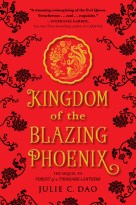
Kingdom of the Blazing Phoenix

Rating: ⭐⭐
Author: Julie C. Dao
Genres: Fantasy, Fairytale retelling
Pub date: Nov. 2018 (read Nov. 2018 on Audible)
Series: Rise of the Empress #2

Well, this was a huge disappointment after the surprisingly good first book, Forest of a Thousand Lanterns. I was not expecting to love the first book because I thought it was a Snow White retelling, and I’m not that into fairytale retellings. But it ended up being a retelling of the evil queen in snow white – her slow descent into evil and how she became to be so obsessed with beauty. I do love a good villain origin story, and this one was an Asian-inspired retelling full of all kinds of nastiness, so I thought it was a great twist of the classic fairytale.

In contrast, Kingdom of the Blazing Phoenix was the boring Snow White retelling I thought I was getting in the first book. Honestly, you don’t even really need to have read the first book to read this one. The first book is told entirely from Xifeng’s point of view (evil queen), but this book is told from Jade’s point of view (snow white). In this book Xifeng is basically evil incarnate and Jade is the good girl out to save Feng Lu. It made me wonder why Dao spent so much time on Xifeng’s characterization in the first book if she was just going to abandon her in this book. I actually didn’t have a problem with this being a Snow White retelling, it just would have been so much more interesting if it was told from Xifeng’s point of view.

But Xifeng has basically lost her humanity in this book, so instead we get to listen to Jade’s inner monologue for 300 pages. Jade is the daughter of the late Empress Li-Wa (sorry, listened to this on Audiobook and can’t find the spelling), who Xifeng usurped in the last book. Xifeng didn’t want any of Li-Wa’s children around, so she sent Jade off to live in a monastery, thinking she would bear the Emperor new male heirs, and more or less forgot about her. However, Xifeng has been unable to produce an heir and calls Jade to the royal palace.

Up to this point, Jade had no idea that she was the lost princess, the true heir to the throne. So she struggles with suddenly being Royalty, but becomes indignant when she arrives at the palace and discovers how much her people have been suffering under Xifeng. She discovers that Xifeng is a servant of the Serpent God and has been killing women and eating their hearts to remain young, so Jade sets off on a quest to collect the dragon relics so that she can raise the lost dragon army (she is apparently the daughter of the Dragon Lord). She teams up with Ren, a young girl and warrior from the palace, and Koichi (again, not sure of spelling), who is a little person and Shiro’s son.

From there, this becomes a classic kind of fantasy quest novel. Jade, Ren, and Koichi travel around Feng Lu collecting the relics, hiding from the Serpent God and Kong, who is now Xifeng’s hunter. They meet a number of people and ghosts who help them along their journey and learn all kinds of stuff about these individuals, but honestly, I can’t remember half of it now or what the importance was, but I’m sure they would have been somewhat shocking twists had I cared at all about Jade.

That was probably my biggest complaint about this book. I just didn’t care about Jade. Okay, I was pretty into the fact that the main romantic relationship in this book involves a little person, but otherwise I just found Jade such a do-gooder that it was boring. She supposedly doesn’t know she’s a princess, but as soon as she finds out, she’s suddenly like the ultimate philanthropist and all obsessed with ending the suffering of her people. She didn’t care at all about the empire before finding out she was a princess and now she’s all incensed about it and has to like swoop in and save the world. She’s constantly trying to be this good, noble person and it was just sooo boring. Like she tries to save Ren from having to work by making her a fake handmaiden, and Ren is just like, “B*tch, don’t feel bad for me, I could kick your ass and I’m not too proud to work.” And then Jade kept trying to send Ren and Koichi away cause she just couldn’t bear for something bad to happen to them. Like, get over yourself Jade, you would literally be dead 8 times without them and this quest belongs to them just as much as it does you. Just because you’re the princess, you’re no more entitled to take down Xifeng than Ren, whose grandmother was murdered by her.

So yeah, mostly I thought Jade was just like, super boring, and I didn’t care at all about the relics or their quest to find them. Honestly, this whole book felt like it was just a lead up to the real plot. I was interested in Xifeng and the havoc she was wreaking on the empire, and I did want to see a showdown between Xifeng and Jade, but I didn’t care at all about the quest and the relics. It just all felt like filler to me and overall I found the plot disappointing. Plus, like where were the seven dwarves? If you’re going to do a Snow White retelling you should at least commit to the dwarves.

And finally, I really didn’t like the ending. The entire book is narrated by Jade, but then when she goes into her enchanted apple sleep it gets narrated by like 3 other characters in her absence and it just felt really disjointed. Plus, Dao tries to tie the ending back to Xifeng’s story with a few random twists relating to the first book. I think she was trying to make us empathize with Xifeng again, but it just didn’t work at all for me. You can’t have her be this psycho, evil queen for 90% of the book and then try and make us care about her again.

So overall, I was really not impressed with this book. I was so excited to read it and I thought the story had so much potential. I just wish it had been from Xifeng’s point of view. What is Jade like from her perspective? I don’t want to totally discount the book though because it is possible this has some important cultural aspects that I’m just missing as a white person. I also just finished The Poppy War, which is a historical fantasy about China that I’ve heard holds a lot of meaning for Chinese People. This said though, I enjoyed The Poppy War a lot more than this, even though I probably didn’t pick up a lot of the nuances that people more familiar with the culture and history would.