Return of the King

Rating: ⭐⭐⭐⭐⭐
Author: JRR Tolkien
Genres: Fantasy
Pub. date: 1954 (re-read in Oct. 2019)
Series: The Lord of the Rings #3

I re-read the first two books in the series back in June, but I got a little sidetracked over the summer before finally picking of Return of the King this month. I’ve had the goal to re-read Lord of the Rings for several years now and I’m so proud to have finally accomplished it!

The Fellowship of the Ring has pretty much always been my favourite of the 3 movies, but there’s no denying that it’s the weakest of the trilogy in book form. Tolkien spends a lot of time in the Shire in Fellowship and to be honest, it’s pretty boring, But TT and ROTK don’t suffer from that flaw at all! I found them both to be so fast paced and Tolkien has really created the most immersive fantasy world and some of the best heros and anti-heros.

All of the characters have grown so much since they first set out from Rivendell and it was really enjoyable to watch Merry and Pippin come into their characters in this book. Legolas and Gimli’s roles are much smaller in this book, but there was a marked change in Aragorn’s character as he finally lays claim to his birthright. There are also some really wonderful secondary characters in this book. I really liked Theoden. He suffers a little bit of pride in the Two Towers, but he’s incredibly kind and selfless in ROTK Eowyn is also totally badass in this book and it’s so fun to watch her and Merry team up and prove themselves.

Faramir proves himself at the end of TT, but is driven by his need for the approval of his father, which results in some bad decisions. However, you cannot doubt his love for his city and his people. Even Denethor seemed to be a better character in the book then his is portrayed in the movie. He is obviously flawed, but he has been corrupted by the seeing stones and is grieving the loss of his son. Unfortunately, he fails to maintain morale and be loyal to his soldiers and citizens, so it is hard to forgive him his faults.

I talked a lot about Sam in my review of TT and I have to devote some time again to him here because he is really the hero of the series for me. Sam is the most selfless, loyal, and caring character. He never gives a thought to himself and gives his whole being over to the cause of the ring and Mr. Frodo. I don’t want to dismiss Frodo’s role in the story, because he is also a hero, despite his failings. He was served a very hard choice and a heavy burden, and it took everything he had just to carry that burden.

But undeniably, he could never have made it to Mount Doom without Sam. Even when Sam is rejected by Frodo, he never gives up on him. He thinks little of himself, but he is one of the most courageous characters. He is driven only by love for the shire and Frodo and he is propelled by hope. Frodo has no room for hope, so Sam takes on that burden too – constantly pushing the two hobbits forward by his belief in a better world. The chapter where they are climbing the slopes of Mount Doom was one of my favourite chapters and I was totally inspired by Tolkien’s writing of these two characters and their ability to just keep pressing on despite all the odds stacked against them.

If I have one complaint about this book though, it’s that the climax is followed by 100 pages of “what happened after”. It’s not surprising because Tolkien is an indulgent writer, but it’s a little hard to power through for so long once the ring has been destroyed. Although, it is a story of epic proportions and in some ways it does feel fitting to give it all this closure.

The Scouring of the Shire is definitely Tolkien’s indulgence at its best. The whole chapter seems entirely unnecessary, but I have to admit I did still kind of love it. It seems more appropriate as a short story, but it was fun to watch the hobbits flexing their muscles around the shire to purge it of all the “ruffians” and “sharkey”. Plus it wasn’t totally without virtue and serves to highlight how all of the hobbits have grown and been changed by their experiences. Most poignant to me was Frodo’s total aversion to violence. I would argue that Frodo actually saw the least violence throughout his quest, but he is the most impacted by it. He wants to save the shire, but he is adverse to partaking in any more death.

But overall, this is a totally epic conclusion to a classic fantasy series. There’s a reason people respond so much to Lord of the Rings. Tolkien lived in this world and explored every part of it, so it’s existence feels so complete. It’s a classic story of good versus evil, but it is filled with flawed and inspirational characters. Now I can’t wait to go re-watch the entire movie trilogy to complete this experience!
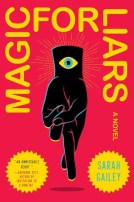
Magic for Liars

Rating: ⭐⭐⭐
Author: Sarah Gailey
Genres: Fantasy, Mystery
Pub. date: Jun. 2019 (read July 2019)

I’ve been on a fantasy hiatus for the last 6 months, so well done Sarah Gailey on writing a book that finally inspired me to break the fast! I’ve been really dis-enchanted with YA fantasy lately, but this adult fantasy finally piqued my interest!

Everything about Magic for Liars seemed interesting and unique. On the surface, it sounds like the same tired Magic School trope, but it has a lot else going for it. Yes, it is set in a magic school, but the premise of the story is about private investigator Ivy Gamble being asked to investigate a gruesome murder that took place at the magic school.

Ivy herself is not magic and lives firmly in the non-magic world. However, her twin sister, Tabitha, is magic and has been working as a teacher at the school for several years. Most non-magic folk are unaware of the existence of magic, but Ivy has been in the know since Tabitha was first invited to attend magic school and she was not. Since then, there has been a bit of resentment between the sisters and they have grown apart.

The magic system in this book was quite different than other fantasy books I read, which I really liked. People with magic are still very much ensconced in the real world, with the study of magic being very deeply ingrained in other fields, such as medicine, math, and science. Some branches of magic are little understood and the magic itself seems to be in some ways much more unstated then similar books, but in other ways much more intense.

What I liked about Magic for Liars is that Gailey takes many fantastical tropes and integrates them into their story, while at the same time, poking fun of them. The most obvious is the “chosen one” trope, but we also have the childhood misunderstanding, the competitive sisters, the psychopathic cool girls, the PI who has to solve their own childhood crime, and a misleading romance, just to name a few. I also liked the diversity that Gailey tried to include in the story. Gailey is non-binary and I thought they did a good job at including diverse relationships, without throwing them in your face.

Despite all the great things Gailey tried with this novel though, sadly I still didn’t love it. Something about the writing just didn’t flow that well and I felt pretty disconnected to the characters throughout much of the novel. I wanted to empathize with Ivy, but I did think she was unnecessarily harsh with Tabitha when they were younger and the misunderstanding between them seemed too obvious to have been the misunderstanding that it was.

So overall, this was a 3 star read for me. I definitely liked it, but I didn’t love it. I am impressed with it as a debut novel though and I’m excited to see what Gailey writes in the future!

The Two Towers

Rating: ⭐⭐⭐⭐⭐
Author: JRR Tolkien
Genres: Fantasy
Pub. date: 1954 (re-read in Jun. 2019)
Series: The Lord of the Rings #2

I’ve never been able to decide what my favourite Lord of the Rings movie is. It’s always been a two way tie for first between Fellowship of the Ring and Return of the King, with Two Towers sitting firmly in second. But I loved The Two Towers book!!! I’ll have to see what I think of Return of the King when I re-read it, but as of right now, I definitely liked the second book better than the first.

In my review for Fellowship, I talked about how I was nervous to re-read it because I was afraid of the run-on descriptions and dense text, but ended up finding it easier to read then anticipated. Granted, I still love Fellowship and gave it 4 stars, but I think it does have the fault of having too slow a start. It takes forever for Frodo to leave the shire and for the story to get going, only to have it stall again with copious amounts of storytelling about each character in Rivendell. It’s not until the Company departs for Mordor that things properly pick up.

At no point does Two Towers suffer from this flaw. I remember being really frustrated when I read this book for the first time and I discovered I was going to have to wait until half way through the book to find out what happens to Frodo and the ring. But because I knew what was coming, I was able to enjoy the first half with the rest of the company a lot more. I think on my first read-through I didn’t really understand how important the rest of the characters were to the story because until that point, the narrative had always been centered around Frodo and the ring.

This book is way more fast paced and it was interesting to remind myself of Tolkien’s version of events, which differ from the adaptation. I think Peter Jackson does a great job on the adaptation (seriously, they are a masterpiece), but I think the reason Two Towers is firmly my least favourite movie is because it drags on a lot. The single chapter battle of Helms Deep dominates the movie and a fair chunk of the events that happens at the end of books 3 and 4 were moved to the final movie. I understand why this was done, there’s not a whole lot of material about Frodo and Sam’s quest in the final book, but it made for a bit of a dragged out movie (for reference, the third book is the shortest of the trilogy, while the movie is the longest).

I also didn’t like how Jackson changed Faramir and Frodo’s characters. He introduced a lot more internal and character conflict in the movie (I’m thinking specifically of Faramir trying to take the ring to Gondor and Frodo sending Sam away). But in reality Faramir was a total stand-up guy who did not suffer the same character flaws as Boromir and Frodo and Sam have a really beautiful relationship as they climbing the stairs and never question their loyalty to one another. There’s some beautiful text about Frodo and Sam imagining themselves in the great stories, which Peter Jackson did include in the final movie, but I loved how the two of them supported each other on the stairs, never letting Gollum come between them despite their differing opinions of him.

In the movies, I do love all of the characters and really enjoy the split between the different narratives. Peter Jackson definitely does a better job with the Ent scenes and I liked that this part of the story is told in real time in the movies, versus as a flashback like it is in the book. But Frodo and Sam in book 4 really do steal the story. Their story is so compelling and I love their strength of character. I love Frodo for his willingness to forgive Gollum and to trust him and treat him with respect, understanding what he went through as a ring bearer and how that still impacts him. But I also love Sam and his unfailing loyalty. I’ve always loved Sam, though Aragorn has generally been my favourite character in the movies. But Sam really shines in the books and he was hands down my favourite. There’s all these quotes about Tolkien and Sam and how Tolkien always viewed Sam as the true hero of the story. There’s not really any definitive proof of this, just heresy, but for me Sam has always been the true hero. The final chapter, the choices of Master Samwise, was definitely my favourite of the book. I love that a small hobbit that has mostly been afraid and unsure of himself, becomes a total bad-ass and takes down Shelob, and then immediately switches to be vulnerable and empathetic, garnering his courage to move forward in the bleakest of circumstance. Sam is the most selfless character, never making choices for himself, only for the good of Frodo and the quest.

I’m dying to pick up Return of the King right away, although I’m not looking forward to having to wait another 200 pages to read about Frodo and Sam again. Tolkien leaves us on a brutal cliffhanger at the end of Two Towers. But I have to read my book club book first, so I’ll have to wait another week or so to start the final book. I loved this second book and I’m thrilled and relieved to find that I still love these books after so many years!

The Fellowship of the Ring

Rating:
Author: JRR Tolkien
Genres: Fantasy
Pub. date: 1954 (re-read in Jun. 2019)
Series: The Lord of the Rings #1

So I first read Fellowship of the Ring when I was around 10 or 11 years old. My Dad played a big role in fostering my love of reading and encouraged me to read the series before the first movie came out. I have to admit, I’m a little impressed that I read this whole series as a pre-teen and actually loved it. I’ve always remembered the books (and heard them described by others) as being super dense and descriptive, and for some reason I was totally intimidated to re-read them.

I’m a huge fan of the movie franchise and I re-watch the whole trilogy every couple of years. I recently re-watched it with my friends and convinced two of them to re-read the trilogy with me. I’m a little embarrassed now at how much I was actually intimidated by this book, because while it is a little indulgent in the descriptions, it’s nowhere near as dense as I had built it up to be in my head and I really had no problem reading it.

I’m going to skip the synopsis because we all know what the Lord of the Rings is about. It’s a classic good-versus-evil fantasy story that puts everything else in the genre to shame. It was fun to re-read and compare what lines Peter Jackson lifted right out of the book and what liberties he took with the characterization (I’m looking at you, Arwen). This is our introduction to hobbits, middle-earth, and the fellowship and re-reading the first book only cemented my love for all of Tolkien’s characters. ‘Hobbits really are amazing creatures’ and I loved Sam, Merry, and Pippin for being so willing to follow and support Frodo, no matter where he went or what challenges they faced. Even hobbits like Farmer Maggot and Fatty Bolger went out of their way to support the hobbits without asking anything in return.

I’m giving this 4 stars instead of 5 stars because there were parts of the story that dragged. It felt like it took forever to actually get out of the Shire and Rivendell and Lothlorien went on a little too long for my tastes. I was really impressed with how Tolkien wrote Gollum in this book. He dogs the fellowship for the entire second half of the book without them ever putting a name to what’s following them and it was pretty creepy. It takes a while to get to know each of the nine in the fellowship as well, but slowly Tolkien starts to tease out their personalities and develop each of them into more fully fleshed out characters.

The action definitely translates differently then it does on the screen, but the book had me on the edge of my seat for most of the second half. I thought things picked up a lot once to the fellowship left Rivendell. There were a few parts from the book that weren’t in the movie that I did remember, like the old forest and Tom Bombadil, but there were other parts I didn’t remember at all, like the fellowship getting attacked by wolves. Overall, I still think Peter Jackson did a great job on the adaptation and I can’t wait to re-watch the series again and get started on Two Towers!

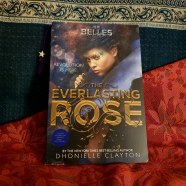
The Everlasting Rose

Rating: ⭐
Author: Dhonielle Clayton
Genres: Fantasy
Pub date: Mar. 5, 2019 (read Mar. 2019)
Series: The Belles #2

Thanks to Hachette Book Group Canada for providing me with a free advance copy of this book in exchange for an honest review. 

I liked the first book in this series, The Belles, so I was really excited to receive an advance copy of the sequel and had high hopes going into this book. Unfortunately, I did not find the sequel as compelling or captivating as the first book and it took me several weeks to trudge my way through The Everlasting Rose.

The Everlasting Rose starts off right where The Belles left off, with Camellia having fled the palace and Sophia being named as heir to the monarchy. Camellia is desperate to find Charlotte in order to prevent Sophia, with her twisted politics, from ascending the throne. Sophia is definitely an A+ villain, so this should have been super captivating, but I don’t think it was well plotted and I struggled to get through it.

Clayton definitely has a unique writing style. Her writing is quite flowery, which I think works really well in the beauty-obsessed fantasy world that she has created. The plot definitely seemed to move slowly in the first book as well, but there was a large mystery element in the first book that compelled me to keep reading and the last third of the book was super high stakes. The mystery was missing from this book, as was the twisted villain.

I can’t believe I’m going to say this, but I actually wanted more of Sophia in this book. She is incredibly twisted and evil, but she brought a lot of tension to the story. The Everlasting Rose is also a high stakes plot, but it relies on Sophia’s malice from the first book to carry the conflict through this story and I just wanted more. Sophia is a looming threat, but she doesn’t drive the conflict and plot in the same way as the first book and even though Camellia is forced to race against time to find Charlotte, I never really felt any fear for her character. Most of the book is spent travelling around Orleans, but never actually advances the plot of the story. Camellia accomplishes very little until she actually returns to Trianon towards the end of the book. The ending was pretty good, but it just took so long to get there that it actually felt rushed when we finally arrived back at the palace. The first three quarters of the story really just felt like filler to get us to the last quarter.

Some authors can really pull off “travel” stories (I’m thinking of Heather Fawcett’s Even the Darkest Stars series), but it lost me in this book. There are 6 Belles in the Camellia’s generation and we meet and interact with almost all of them, but never long enough to really care about them or get a sense of who they are. Coming into this book I only really cared about Camellia and Amber, and I was intrigued about Edel. But then the author seems to abandon the relationship conflict she was developing between Amber and Camellia, which I thought was a real shame because it was really interesting to examine the competitive relationship between them and how it manifested with their individual ethics.

The romance also threw me for a total loop in this book. It was unexpected and very ‘insta-love’ and I wasn’t into it. The first book ended with so many broken relationships and I just don’t think any of them were resolved well in this book. August was a bit of a mystery to me in the first book and I don’t understand what drove his character. It’s developed a bit further in the sequel, but was overall, unsatisfying.

Mostly I just wanted to see more interactions between Sophia and Camellia. I was really expecting for this to be a trilogy, but based on the ending of this book, it seems it’s a duology? But the whole time I was reading this I was like, “oh, this book is totally suffering from middle book syndrome, it’s just going to be a travel book and the third book is where we’ll get a really intense showdown between Sophia, Camellia, Charlotte, and the Iron Ladies.” But it seems like that is not to be and I didn’t think this worked as a final book.

One thing that bothered me was the assumption that Charlotte would make a good ruler. Everyone wanted her to be queen because she was the rightful heir and Sophia was so vile that literally anyone else would be better. But Charlotte was in a coma for years, so I thought she would probably be devastated when she awoke by all the lost time and would likely be stunted in development as she was essentially a child when she went into the coma. Something clearly went wrong with Sophia to make her the way she was, but why assume that Charlotte would naturally be better? She wouldn’t have even understood the drama and politics of what went on at court over the past years because she was effectively absent, and I feel like it would be hard for her to accept the narrative that she was told about her sister. Why would she trust the Iron Ladies, who essentially abducted her, over the word of her sister? It seemed really problematic to me.

So unfortunately, there wasn’t really much that I liked about this book. Clayton has a really interesting style of writing and I think this world had so much potential, but I was ultimately disappointed.