 Rating: ⭐⭐⭐⭐⭐
Author: K.A. Tucker
Genres: Fiction, Romance
Pub date: Aug. 2018 (read Nov. 2018)
5 Stars?! Are you okay Maria? Are you really going to give a romance novel 5 stars??
This book was so out of my element that I feel like it actually came full circle so that it was exactly in my element. I don’t read very many purely romance novels, but I definitely love a good romance subplot in other genres. However, I was drawn to this book for the setting over the plot. I’ve been obsessed with Alaska ever since I read The Great Alone earlier this year and I couldn’t turn this book down,
I say it’s out of my element because it’s romance. But the setting is right up my alley. I’ve been living in Vancouver for the last five years and I’ve become a little bit obsessed with the great outdoors. I spent almost every weekend this summer either hiking, backpacking, camping, or kayaking, so I love books with isolated settings. Even though I would have had a totally different approach to visiting Alaska than Calla did, I still found this book very relatable.
Calla Fletcher was born in Alaska, but she’s spent her entire life in Toronto. Her mom fell in love with an Alaskan bush pilot, but she couldn’t handle the Alaskan wilderness and moved back to Toronto when Calla was only 2. Her dad, Wren, couldn’t bear to leave his plane company, Alaskan Wild, and over time, Wren and Calla became estranged.
Fast forward 24 years; Calla is 26 and has just been restructured out of her bank job. She loves city life and has been pursuing fashion and lifestyle blogging with her best friend Diana when she receives a call from Alaska that her Dad is sick and this may be her only chance to finally re-connect with him and re-visit the place where she was born. She’s out of a job and her and Diana think the photos would be great for their blog, so she makes the trip up to Bangor, Alaska.
In the beginning, Calla struggles with Alaskan life. She’s used to fast paced city life, being able to get a soy latte where ever she wants, and spending lots of time every day making herself look good for photos. Next to the wild people of Alaska, she seems vapid and vain. I’m a lot different than Calla. I don’t wear very much makeup and I wouldn’t bat an eyelash at wearing the same grungy outfit every day if I had to (I certainly would never bring two large suitcases on a one week trip to the wilderness). But even so, she’s very relatable. I understand her desire to look good and take beautiful pictures. She’s in the great unknown and I would definitely be posting pictures all over my instagram if I was her. But she has a hard time adapting to the change of pace in Alaska and struggles with other emotional issues, like re-connecting with her sick father.
The setting of this story was different than I expected. I was expecting the gorgeous mountain and glacier views that I got in The Great Alone, but what we get instead is a dingy little town in the middle of the flat, Alaskan bush. I thought Tucker’s description of the run-down buildings when Calla first drives through town was so great because I could just picture this little town in my head and because it doesn’t have the stunning mountain backdrop that I was anticipating, it was a lot easier to relate with Calla’s initial culture shock. This book ended up being a lot more than just the setting of Bangor, but the community of it. You really get a sense of what it’s like to live in a backwater community in rural Alaska – the way people depend on one another and support each other. It gave the setting depth. And though Calla was slow to appreciate it, she got there in the end.
This was my second romance book in the last month (recently read Colleen Hoover’s, All My Perfects) and what I liked about both books was that they weren’t solely romance novels. I wouldn’t really even call The Simple Wild romance because it has so much else going for it. This book is really about all the different kinds of love in the world. It’s about making peace with your past, being open to new experiences, and making time for the things that really matter to you. Tucker strikes a wonderful balance between Calla’s relationship with her dad, the romance, and all the different kinds of platonic love that are showcased in this book.
So on to the romance! I haven’t even mentioned Jonah yet. It’s obvious from the synopsis where the book is going, but it was a super fun ride. Jonah is Wren Fletcher’s best pilot. He’s a little rough around the edges sometimes, but he has a lot of love for his job and helping the villages scattered around Alaska get the supplies and resources that they need. He will go above and beyond to help someone in need. But this is not the person Calla first meets. Wren sends Jonah to pick Calla up in Anchorage and they get off to a bad start. Jonah has seen girls like Calla before and he doesn’t have any patience for them. He thinks she’s entitled and vapid. But Calla also has little time for Jonah. He’s rude to her from the get go and dismisses her intelligence. It’s the classic couple hates each other, misunderstands each other, and then loves each other dynamic. But it worked.
Calla is many of the things Jonah thinks of her, but she is not dumb and she does care about her dad and his business. In the same way, Jonah was many of the things she thought about him, he was very mean to her and his honesty starts them off on the wrong foot, but he is also a deeply caring individual. I definitely loved Jonah. Any guys who loves the outdoors already has brownie points in my book and I liked that he was honest, even though it was sometimes hurtful. He realized his mistakes and apologizes in his own way, but I think he also had a lot of fun bantering with Calla and kept it up because it was fun for him to set her off kilter. I also loved that he was able to laugh at himself and his joy for life.
I definitely got a kick out of all the pranks they played on one another. I was a little concerned when he stole her make-up bag because make-up is definitely a crutch for some people and has the potential to be pretty traumatizing (plus there’s absolutely nothing wrong with loving make-up). But I ultimately decided it was okay because Calla’s prank on Jonah was pretty bold and could easily have crossed the line. She pulled a prank on him that made him more attractive to her and by swiping her make-up from her, he was essentially doing the same thing.
Overall this book makes me yearn for more quality new adult fiction. I am years past lusting over the 17 year olds in YA contemporary and most YA fantasy, but I can’t yet relate to books about parents, their kids, and their failing marriages. Don’t get me wrong, I love a good family drama, but I think the romance in this book appealed to me so much because it’s actually where I’m at in my life. I’ve talked a few times about how literature needs more books about college and university (which I still think it does), but I also think we need more books about mid to late twenties, when people are out of school and starting to figure out their lives, but haven’t yet settled down into the standard family dynamic. I would love some great new adult reads. I’m sure they’re out there already, but they definitely aren’t getting the kind of love and promotion that other types of books get.
Finally, I loved the ending of this book. I love books that hit me with tough choices. Nothing annoys me more in love triangles then when the author makes one of the triangle into a jerk so that we don’t have to feel bad for them getting the axe. There’s no love triangle in this book, but I love stories and decisions that have two equal sides that are both valid. I love when the author doesn’t try to push us toward one ideal or the other or write the story in such a way as to make one choice easier or more obvious. Calla and Jonah are basically re-living her mother and fathers love story. Calla is a city girl, Jonah’s in love with the wild. They know there’s an expiration date on their relationship, but they fall in love anyways. There’s no easy answer to their dilemma. One of them has to be willing to move for the other to make it work and no one wants to be the one to either give up their life, or ask the other to give up their life. I thought the ending happened just a little bit too fast, but I really liked how Tucker approached their conflict.
So overall, I really liked this book. My only problem was that it took me a little while to get into it at the beginning. I’m not really sure why. I wouldn’t change the beginning. Overall it’s a bit of a slow burn type novel, but it reads really fast and once I got invested in the characters, I totally flew through the book!
SPOILER: The ending is still left pretty vague, but I really liked Jonah’s compromise. It actually broke my heart to see him in Toronto because it’s obvious he wouldn’t be happy there and that it would never work. But he wasn’t willing to give up and he was still willing to move somewhere where they might both have a chance at being happy. Would moving to anchorage so that Calla could still have a semblance of city life be enough? Maybe not, but I loved that he recognized what wouldn’t work for them and decided to try and find something that would work. With this approach, I feel like there are a lot of places that the two of them could be happy. There are many Canadian centres where Calla and Jonah could make a life and still be on the brink of rural life. It was such a simple approach and I really think it could work for them. Relationships don’t have to always be about sacrifice – they shouldn’t be about sacrifice – but about compromise, and this compromise made me really hopeful for this fictional couple. Plus I think it sends a way better message then having Calli give up her life in Toronto for a guy. Women and girls have been preached that message enough.
 Rating: ⭐⭐.5
 I could never write a post about historical fiction that didn’t feature The Book Thief. It’s been a few years since I’ve re-read this one, but it always sticks out in my mind and is one of my all time favourite books, period. Markus Zusak has such a way with words and this book makes me bawl my eyes out every time. The story is told by a personified version of death and the observations they make about a young girl, Leisel, and her foster family living in a small German town in the 1940’s.
 A Tree Grows in Brooklyn is another book that I love to talk about. This is another historical read that is all about the writing. I love Betty Smith’s writing and this is just the most beautiful coming of age story set in Brooklyn at the turn of the century. It’s a family drama about 10 year old Francie Nolan and her family’s struggle to bring themselves out of poverty. It’s a slow burn novel, but the writing just speaks to me.
 The Great Alone is a new discovery for me in 2018, but it is haunting and 5 months later, I still can’t stop thinking about it. I’m like 80% sure this is going to be my favourite read of 2018, unless I stumble on something REALLY good in the next month. The Great Alone is set in Alaska in the 1970’s and is about teenager Leni Albright and her parents trying to make a subsistence living in this hospitable environment. Her father, Ernt, was a POW in Vietnam and suffers from PTSD and Seasonal Affective Disorder, struggling through the long, dark Alaskan winters. This book is all about the setting for me. Hannah creates the most wonderful sense of setting and atmosphere and the story will break your heart.
 Like The Book Thief, this is an extremely popular novel, and with good reason. All the Light We Cannot See took Anthony Doerr 10 years to write and it absolutely shows in the writing. The story follows a blind French girl and a young German boy as one flees to escape the war and the other is forced into the war. They only meet briefly, but through time and circumstance, they leave a lasting impression on each other. The writing is gorgeous in this book and though I haven’t revisited the story in several years, it still sticks with me.
 When I visited Croatia in 2012, I searched far and wide for a good historical novel to read about the war, but I had to wait for this book to be published in 2015 to finally get it. Girl at War tells a truly haunting story of a young girl, Ana Juric, who is forced to flee to America after the traumatic death of her parents during the Bosnian War. Ana has tried to escape the nightmares of her past for many years, but eventually decides to return to Croatia to put the ghosts of her past to rest. It’s a short book, but it is an incredibly captivating story about a recent and devastating part of Croatia’s history.
 I read Homegoing a few years ago for book club and in my opinion, it is a masterpiece of historical fiction. The story format is unlike anything I’ve read before and spans a jaw-dropping period of 300 years! Homegoing is about two sisters in 18th century Ghana. One sister is kidnapping and shipped off to America as part of the slave trade and the other sister marries and remains in Ghana. The book has only 14 chapters, but each chapter follows the next generation of each sister (7 generations in total). Homegoing is extremely well written and examines how each generation is shaped by the choices of their ancestors and the circumstances of their time. A fantastic look at the impact of the slave trade on many generations.
 This is a book that I really did not expect to love, but ended up totally surprising me. It tells the story of Li-Yan, a young girl of the indigenous Akha people in rural China. Tea is important part of her village culture and she grows up farming tea. Li-Yan has a huge desire to learn, but though unfortunate circumstances, she becomes pregnant and is forced to leave her baby at an orphanage. Her daughter ends up being adopted and grows up in America and the story follows both mother and daughter. I learned more about tea in this book than I ever wanted to know, but it was fascinating and Lisa See does such a wonderful job sharing the Akha culture and creating complex and interesting characters.
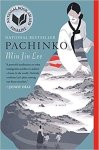 Pachinko is another book that is breaktaking in it’s scope. The story starts off in Korea and focuses on young Sunja’s family and her eventual immigration to Japan. Pachinko tells of Korea and Japan’s fraught history and the mass exodus of Korean’s to Japan and the challenges they faced there as immigrants. The book spans 80 years and 4 generations and explores women’s roles, the lasting impacts of our actions, and the relationships between different family members and generations. It’s a slow burn novel, but a wonderful look at the challenges of immigration in a non American context.
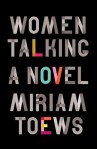 I’m a little unsure what genre to categorize Women Talking under. It has an element of historical fiction to be sure, but it is heavily imagined. The book centres around the real life incident that took place in a mennonite community in Bolivia. For 4 years, the women of the community would wake up in the mornings having been violated and abused in their sleep. The women were told they were being punished by God for their sins, but it later came out that several men in the village were sneaking into their homes, knocking them out with animal anesthetic, and raping them in their sleep. This story sets the premise for the book, which is essentially an imagined conversation between the women of the village as they decide what to do in the aftermath; whether to forgive the men, stay and fight, or to leave. It’s a short book, but it packs a punch. It is a thoughtful discussion about the bounds of human forgiveness, the tenacity and hopefulness of the human spirit, and a call to action to do better. Please note that while the premise of the book is true, the rest of the book is fiction.
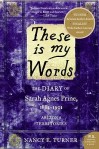 I was on the fence whether to include this book or not because it’s been many years since I read it and I’ve read a lot of books since, so I wonder how accurate my memory is. But I have such good memories of this book that I can’t help including it. These is my Words is essentially the diary of a young girl turned pioneer woman. It takes place in the late 1800’s as Sarah Prine travels around the southern states with her family trying to make a life for herself. She suffers many atrocities, but she is driven by her desire to learn and for personal betterment. It is ultimately a love story, but it covers a tumultuous part of American history and is a great look into the hardships of the pioneers.
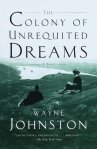 This one is a little self indulgent because it’s about my home. It’s one of those bucket list books I felt required to read at some point since it focuses on about 50 years of Newfoundland history. I was expecting it to be dry, but it was actually a fascinating character study and look at Newfoundland’s history and joining with Canada that I think anyone (and certainly any Canadian) can enjoy. Newfoundland has a very different history than most of Canada and joined Canada under less than ideal circumstances. This book is about Newfoundland’s first premier, Joey Smallwood, and his upbringing, the role he played in NL unions and works rights, his persuasive negotiating skills, and his campaign to join Canada.
 Last but not least, I decided to include Outlander on this list. I’ve read the first 3 books in the series and I was following along with the TV show, but I’ve fallen behind on the last season. These books are part trashy romance, part well-researched historical fiction. It’s the only book on the list with a fantastical element because it involves time travelling from the 1940’s to the 1740’s, but the majority of the series takes places in the 1700’s. Gabaldon covers a huge amount of Scottish, English, French, and American history in this series and I think she deserves the kudos. I learned so much about Scotland from this series and let’s face it, they are just a lot of fun.
 Rating: ⭐⭐⭐⭐
 Rating: ⭐⭐⭐⭐
 The Paperback Princess