I honestly don’t know whether I loved this or hated it…
Okay, I definitely didn’t hate it – I thought it was a super quick read and the characters had a lot of chemistry. They’re both a mess and I wanted them to sort out their personal issues, but I understood why they were incapable of doing so. This was truly enemies-to-friends-to-lovers and I loved that about it.
Mostly I just hated Josh. He endeared himself to me after awhile, but my god, this is the most entitled, dumbass, privileged, white man I’ve ever read about! It was a little unbelievable how tone deaf he was considering how progressive Ari was. Both characters are also super depressed and I don’t think the book dealt with their depression in a healthy way. Neither ever seeks professional help, which I thought they both should.
The author is apparently all about portraying “real” relationships that are reflective of the messy and complicated world we live it. But it’s 2023 and I would have loved if she had applied a more critical lens to her characters’ mental health and how they’re going to take care of themselves in the long term. It reminded me a lot of Adelaide, by Genevieve Wheeler, which I read earlier this year, except not as gritty or reflective. This is still a proper romance (which Adelaide definitely isn’t).
Anyways, apparently it’s based on When Harry Met Sally, which I haven’t actually seen, but am definitely going to go and watch now. The reviews mostly say that it’s not actually like the movie, but even from the synopsis, I could see the parallels, so I will have to go watch it and report back!
Is this worth reading? Honestly… maybe? I did read it in a bit of stupor-like fever dream over 3 days and I couldn’t put it down. The dialogue is quite good and like I said, the chemistry is great. It’s not your run-of-the-mill romance novel and I appreciated that the author tried to do something different. I’m just not 100% sure what her themes were and I don’t really think they landed. This is not a fantasy romance that one might dream about, and with a lack of meaningful themes, it leaves me kind of wondering what is the point? At the end of the day, all I can really conclude from this is that there really are no consequences for idiot white men. They can walk all over women of colour, never issue any meaningful apology for their dumb shit, sit at home in their giant apartments doing nothing for an entire year, and then still inherit a well-known restaurant, fail upwards, and get the girl. So inspirational.
So…. I can’t lie, I hated this. I’m literally offended this book made it to the Canada Reads shortlist. Read the other selections over this one.
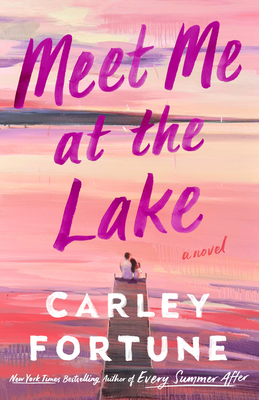
I don’t give books 1 star unless they’re actually offensive, but this was so disappointing. I read Carley Fortune’s first book, Every Summer After, earlier this year, and despite one key plot point that I hated, I really liked the book. It’s one of the best Friends to Lovers stories I’ve ever read and it would have been a slam dunk but for the big ugly cheating incident.
Meet Me at the Lake sounded a lot like Every Summer After from the beginning: they’re both second chance romance, they’re both set in Ontario lake country, and they both open with a parent death and center on grief. Second chance romance isn’t my favourite trope, but I do like it when it’s believable and done right, like in Every Summer After. So I was happy to pick this up and read another book set in Canada.
In Meet Me at the Lake, our protagonists, Fern and Will, meet for a day in Toronto in their early twenties. Their time together is brief, but they leave a lasting impact on one another’s lives. Fast forward 10 years and Will shows up at Fern’s family resort after the death of her mother and the two have the opportunity to reconnect and heal past hurts.
It was like this book took everything I liked about Every Summer After and threw it away, only focusing on all the parts I disliked. 10 years is simply too long for this kind of second chance romance. I believe it in Every Summer After because Carley Fortune sold me on such a beautiful childhood friendship and bond, but Fern and Will are brief moments in one another’s lives. They don’t really know anything meaningful about one another and it’s insulting to paint them as star crossed lovers who really understand each other after spending less than 24 hours together.
I thought Will was absolutely insufferable, acting like he knew what Fern wants when he only spent a day with her 10 years ago. Why try and sell us on Fern’s desire to build something for herself, only to push her in the complete opposite direction later? I don’t care if he was supporting his sister, he was such a flake to Fern. It wasn’t obvious to me why he showed up at the resort or why he stayed. He flip flopped around so much – one minute he has no interest in Fern, then he desperately wants her, only to turn around again and reject her. He treated her like garbage and then the author has the audacity to make Fern chase after him and try to win him back in the final scenes? NO THANK YOU!
My biggest problem with this book was that it’s incredibly boring. The single day Will and Fern spend together is extremely stretched out considering how little of note actually happens; and the present day storyline focused way too much on the minutiae of the resort to be at all compelling. It took me so long to read the book because I felt like nothing was happening and I was so bored. Will is boring, Fern is boring, I honestly have no idea what these two characters see in each other or why they fell in love. Neither of them is particularly memorable. Maybe that’s why they fall in love – because they both have the personality of a boiled potato – I didn’t believe any part of their love story. There’s a side plot with Fern’s mom and her dad and her mom’s lover, but it added very little to the story and it wasn’t compelling either.
To round off this review, I obviously have to come at Carley Fortune for the cheating trope because she clearly has no idea where the line is! Maybe I’m old fashioned, but the amount of emotional cheating in both of her books is unbelievable. She limits the physical cheating to one key scene, but why are her protagonists always attached to other people when they fall in love? Why do they seem to think it’s fine to emotionally cheat on their partners? I’m mystified. Honestly, I loved Every Summer After so much I think I’d be willing to give Fortune another try? But I seriously hated this so much, I’m not sure if it’s worth it. I do not recommend this. Go read Every Summer After instead.
Rating: ⭐⭐⭐⭐ Author: Ali Hazelwood Genres: Romance, Fiction Pub. Date: June 2023
If you’ve been following me on this Ali Hazelwood journey, I loved The Love Hypothesis and hated Love on the Brain. I felt they were essentially the same book. As a result, I was nervous going into this book – it definitely has some flaws, but I ended up actually quite liking it.
Love Theoretically focuses on two physicists from competing areas of physics. Elsie is a theoretical physicist, while Jack is an experimental physicist. The two rivals butt heads, but prolonged time together brings out an appreciation and admiration for each other’s work. You know the drill – rivals to lovers – nothing too revolutionary for Ali Hazelwood or the romance genre.
While Hazelwood relies on a lot of the same tropes as her previous books, I do think that Love Theoretically was a fresh take on her STEMinist themes and I thought both the plot and the characters offered up a lot more nuance than they did in Love on the Brain. My biggest complaints for Love of the Brain was that Bee and Levi were extremely boring people and that the plot was lacking. In contrast, Elsie and Jack had a lot more character development and growth – I didn’t feel like they were carbon copies of Hazelwood’s other characters. Elsie and Jack both stood solidly on their own, they were flawed but likeable, and I understood what each saw in the other and why they fell in love. While Jack is still incessantly described as “big”, I didn’t feel like he was an Adam Driver stand-in like I did in the other two books.
Likewise, the plot was better thought out in this book. I liked the ongoing theme of Elsie learning to do things for herself and the plotline with the physics rivalry and her academic advisor. It was a bit slow at first with the extended interview, and I think it got a little lost at 70% with so many sex scenes (where’s the plot?), but overall, a much better plot progression and it kept me engaged throughout the novel. I do really like her academic and STEM settings; I felt that in Love on the Brain, she had a lot of ideas, but didn’t know how to execute them, whereas in this book she had clear themes and progressed them in greater depth.
I’m a little bit torn on Hazelwood’s style of writing. Her writing style is very colloquial and I think she invests a lot of time in making it hip and quirky. I don’t really like it, but I can’t deny it makes for easy reading. I absolutely devoured the book, reading the entire thing in 2 sittings in less than 24 hours. So it’s hard to critique the writing because it’s obviously compelling, I just don’t find it very realistic. I feel like Olive had no personality and Hazelwood remedied this by making Bee and Elsie super quirky. I can accept this style of writing, but I had trouble buying into the way the characters talk to each other because I thought the dialogue was just really unrealistic, particularly between Elsie and Cece. It’s definitely a stream-of-consciousness style of writing and sometimes it was hard to differentiate between internal monologue and dialogue. I feel like the author inserts her opinions into the writing a lot as kind of sidebar comments, but they just read weird to me.
Overall though, it was a cute story. Elsie and Jack didn’t feel like the same characters as Olive/Bee and Adam/Levi, but I can’t deny Hazelwood is not the most creative writer. This did feel like a bit of a mix of both of her previous books. I’ve already mentioned that I’m exhausted with the “big” men trope, but I’m also a bit tired of all of the male leads being in positions of power over the female leads. The men are all older and I know that it’s traditionally men who will hold the positions of power, but it’s just giving me a bit of the ick-factor after 3 books, plus I felt it this book was lacking in any kind of diversity.
But my real gripe is with the miscommunication trope. This is clearly Hazelwood’s favourite and it is just so grating! It was definitely worse in Love on the Brain, but it’s still pretty bad in this one too. I’d love to see the female lead not being an idiot in at least one book. I just don’t like Hazelwood’s choice to have her male leads drive most of the social change in her books. I think she does it for romance reasons, but let’s be real, it’s always the marginalized group that will ultimately make change happen. I didn’t like that Adam ultimately got Tom fired in Love Hypothesis and that Jack got the two sexist professors removed from the panel and was the biggest advocate for physicists collaborating. I did love George as a character though!
Anyways, viewed in isolation, I think Love Theoretically may actually be the strongest of the 3 books. I liked Love Hypothesis a lot, but the fake dating aspect was pretty juvenile and unbelievable. Everyone should skip Love on the Brain altogether, but this one was a pretty good balance of character and plot development. The characters are likable, the romance is cute, but collectively, none of Hazelwood’s books are really that different from one another. But I can’t lie, I’ll probably still buy the next one (well her next adult romance anyways, I’m not interested in her YA book and her novellas were terrible). At least someone is writing about women in STEM!
I’m a bit heartbroken about this book. I feel like the internet has lied to me. I’ve been seeing this everywhere for years, so I’m not sure why it took me so long to read it. It might be the case of a book not living up the hype, but this was really different from what I was expecting.
Red, White, and Royal Blue is a love story about the fictional first son of the first female president of the United States (Alex), and the fictional younger Prince of England (Henry). In this universe, Obama was succeeded by a female democrat from Texas and her bi-racial family, while the Royals were all just given slightly different (but all too common) names. Alex is more believable because anyone could hypothetically become president, but Henry basically just seemed like Harry to me, because there’s only one real British Monarchy, so it’s hard to picture anyone else.
Alex and Henry start off as enemies when they meet at random political functions, after a debacle at the royal wedding involving a very expensive cake, they pretend to be friends to avoid an international relations debacle. What this debacle would be, I’m not really sure since America is not part of the commonwealth and as far as I can tell, there’s no real consequence to insulting a royal, and if there were, America-land-of-the-free, wouldn’t care anyways.
Anyways, they obviously fall in love, which is more scandalous for Henry than it is for Alex, since one is the son of an heir-based system and the other the son of a progressive democrat. Parts of it are pretty cute and it is totally the celebration of queer love that it’s touted to be. I really wanted to love it, but the more I think about it, the more I realize I kind of hated it. I do recognize that this book will mean a lot more to gay people than it does to me, so please take this review with a grain of salt. I’m so happy for you if you loved it, I wish I did too!
I don’t really think I can talk about my thoughts on this book without spoilers, so I’ll put a disclaimer that the rest of the review is going to contain spoilers. If you’re looking for some mindless fun, don’t be deterred from picking this up, but it’s no masterpiece.
Spoilers Below
. . .
My biggest issue with the book stems from the fact that it climaxes at like 45%. What kind of romance has the two main characters getting together before the halfway mark? There’s no sexual tension or will-they-won’t-they between these two. Henry makes a move, it’s immediately reciprocated, and then there’s virtually no conflict between the characters for the rest of the book. There’s a brief predictable break-up, but it’s so quickly resolved I questioned what I was possibly going to be reading about for the rest of the book.
The book was a lot spicier than I was anticipating as well. I like one good spicy scene at the height of the novel, but this just felt like two people with limited chemistry constantly smashing with no development of the plot. Instead of getting meaningful conversations about coming out and self exploration, we get a very boring and convoluted plot line about Alex’s mom’s re-election campaign. The author must be from Texas, because I’ve never seen Texas so romanticized. Maybe this is more compelling to Americans, but the politics described were presented as so black and white, with Democrats as saviours and Republicans as villains, it was completely lacking in nuance. I’m not going to argue that Republicans have made themselves into historical villains by rolling back reproductive rights, civil rights, and 2SLGBTQIA+ rights, but let’s not pretend the Democrats don’t also have their flaws.
I liked the exploration of Henry’s character a bit more. Overall, I found Henry to be an extremely boring person, but somehow the wealthy prince and his conflicted sexual identity was way more relatable. I did like that Alex was able to have such a positive coming out experience and I think it’s really important to see queer joy in stories as well, but I felt that Henry’s coming out was likely more relatable to the average person. Everyone has a cranky old relative that’s totally unaccepting of any deviation from “the norm”, even if that relative is not the Queen of England.
Personally, I think the biggest missed opportunity with this book was the decision to tell the entire story from Alex’s point of view. I think this book would really have benefitted from a dual perspective so that we could get Henry’s side of the story as well. I didn’t get why either character was attracted to the other, but I think I would have enjoyed this a lot more with a proper British narrator sharing Henry’s perspective. I read this as an audiobook and I thought the narrator’s portrayal of Henry was terrible. Henry did not read like a sexy, young prince and it’s possible this contributed to my lack of enjoyment of the book overall. I didn’t like any of the narrator’s accents.
Overall I just felt like this book didn’t know what it was trying to say. Henry especially has a lot of privilege and honestly, it did read that way. He acknowledges the racist and colonial history of the monarchy, but he’s still a part of it. In that way, I think it’s actually a lot like Prince Harry in that Harry clearly tries to set him apart from the rest of the monarchy, believing himself not to be like the rest of them, yet he’s so inherently privileged that he has no awareness of his own blind spots. I felt bad for how oppressed Henry’s sexuality was, but at the same time, it was hard to empathize with someone with so much privilege, wealth, and power.
Anyways, I think I’ll stop this review there. Obviously I didn’t like it. Maybe I would have liked it better as a print book, but I won’t be finding out. Honestly, no judgement if you loved it, but I don’t get what the hype is about, this just wasn’t for me.
Rating: ⭐⭐⭐⭐ Author: Emily Henry Genres: Romance, Fiction Pub. Date: April 2023
At this point, I feel like Emily Henry needs no introduction. She’s become one of the most popular contemporary romance writers and I continue to be a fan of her storytelling style. First and foremost, I find her romances to be incredibly believable, and I love that even though romance is central to the plot, there’s always a lot of other issues going on in her stories. She has captured some pretty heavy themes in her books and despite the name, I think Happy Place is her saddest book to date.
Harriet and Wyn have been separated for 6 months, but they haven’t worked up the courage to tell their friends yet. When they find out that their friend Sabrina is selling her family cottage in Maine, the 6 friends meet up at the cottage for one last hurrah at Harriet’s ‘happy place’. The problem is, Harriet and Wyn don’t want to bring down the party with their break-up, so they pretend to still be together until the end of the trip.
I’m sure you can guess how this goes. It’s both as predictable as you expect, while also being surprisingly unpredictable and heartbreaking. Parts of this book really worked for me, while other parts didn’t. I don’t mind a good fake dating scenario, but I’m not a fan of the miscommunication trope, which this book definitely had.
Harriet and Wyn’s love story worked for me. I loved the flashbacks and getting to know how they fell in love. It was really soft and believable and the two characters had undeniable chemistry. I also liked the inclusion of so many secondary characters. The storyline about finding a group of people you connect with and then having to grow up and go in different life directions is very relatable and I think it brought more depth to the story.
Emily Henry is good at creating really complex dynamics between her characters in a very sad kind of way. Sometimes no matter how much we love another person, there are just pieces of our lives that will never be compatible. It’s important to give and take, but not at the expense of the core of who we are. Henry weaves these intricacies into her characters in a way that you legitimately wonder if they will be able to reconcile and make it work in the end. Harriet and Wyn never had a problem of loving each other, but they struggle with being the person that the other needs. They are both people pleasers to the extent that they sabotage their own happiness.
It’s a compelling story and I sped through it, but having some time to reflect, there were definitely some aspects about it that I didn’t like. Mostly it was to do with the rest of the friend group. I thought the concept for the book was great, but in practice, I didn’t think any of the secondary characters were very well developed. I never really got a sense of who any of the friends were, except for Sabrina at the end. Nobody was very fleshed out and because of this, it was hard to empathize with any of them.
Honestly, I thought Sabrina was terrible. Without giving anything away, I thought she made some really questionable choices and while I understood that in theory, her decisions were made from a place of love, it didn’t excuse her for playing God with her friends’ emotions and generally being so manipulative. Had her character been a little better developed, I might have understood her better, but all 4 of the friends felt like shells of people to me.
Second, as much as I love Harriet and Wyn, I thought the ending was a bit frustrating. Just talk to each other and say what you really mean instead of constantly making assumptions about the others motivations and feelings. At the end of the day, these two still had a lot to learn about each other and it was just kind of sad that despite being together so long and loving each other so much, they had no real understanding of each other’s psyche or emotional state.
Finally, this book was just too sad. There’s a time and a place for really sad and emotional books, but a contemporary romance with a hot pink cover with happy cartoon beach goers is not it. You should absolutely have highs and lows in your narrative, but I really think you need a certain level of balance so that the entire book doesn’t read as sad and nostalgic. Harriet and Wyn had a lot of happy moments in the earlier days of their relationship, but the present day narrative was just so sad that it overwhelmed the rest of the book. If you’re going to bring your reader low, you have to have a recovery plan. This book was depressing from start to finish and as much as I loved the characters, it left me feeling sad and overwhelmed rather than hopeful.
I still really liked it. If you’re an EH fan, definitely pick this one up, but it’s not the kind of romance I would be in a rush to re-read. Book Lovers remains my favourite to date, but I will 100% be reading Emily’s next book, Funny Story.



 The Paperback Princess