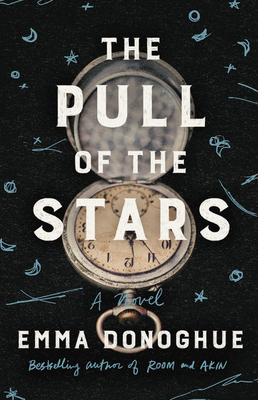
The Pull of the Stars

Rating: ⭐⭐⭐⭐
Author: Emma Donaghue
Genres: Historical Fiction
Pub. Date: July 2020 (read Oct. 2020 on Audible)

With everything that’s going on right now, I was super intrigued by the plot of The Pull of the Stars. It’s set in 1918 Ireland during the last global pandemic. The entire book revolves around 30 year old nurse Julia, who works in the maternity ward of the Dublin hospital. However during the pandemic, she is assigned to the pandemic part of the maternity ward, which is where all the women with flu symptoms have been sent.

The Pull of the Stars wasn’t quite what I was expecting, but it was definitely compelling. Emma Donaghue made the somewhat interesting choice to set almost the entire novel within the hospital over a span of only 2-3 days. Throughout that time, we see the strain that Julia is under as a nurse and the limited resources of the hospital due to the pandemic. Donaghue focuses both on the challenges the flu has on the mothers and their labours (in many cases it caused the women to go into pre-mature labour, which obviously complicated the births), as well as the challenges women in general faced during the time period.

At 30, Julia is unmarried and considered a bit of a maid. Besides nursing, she mostly takes care of her brother, who came back from the war severely traumatized. The hospital is extremely understaffed, so they bring in a young volunteer named Bridie to help in the ward. Bridie was raised in the convent by nuns and her situation shines a light on the catholic church and the unfair advantage they took of girls and women without families or who found themselves in bad situations. Bridie was abused by the nuns and then forced to continue working for them to pay off her indenture for the care she received as a girl (even though the nuns are paid by the state). Donaghue explores this theme of abuse of power by the church throughout the novel and I found it really eye-opening and enraging.

Finally, the novel also has a small focus on female doctor, Kathleen Lynn, a former rebel who’s supposedly on the run from police. I liked how Donaghue explored what it meant to be a female doctor at the time, how she was perceived by men, and how her approach to medicine and labour differed from that of the male doctors. She definitely saw more of the humanity of the new mothers when they experienced complications in labour and generally was less judgmental of those who had fallen pregnant outside of wedlock.

So overall I thought it was a really interesting book. The themes were subtle and a lot of time did focus on the new mothers and their complicated births, so I liked how the author explores the other links between church and state, especially since it’s so relevant with the story being set in 1918 Ireland. The only thing I didn’t like is that there’s a hasty romance thrown into the story near the end that felt very much out of place. I get what Donaghue was trying to do and I appreciate her for trying to explore some other themes, but it just didn’t work for me. It was too short lived and I don’t think it really added much to the story overall. 

Otherwise, this was a good book that wasn’t too long or overwritten. I listened to it on audiobook and thought the narrator did a good job.
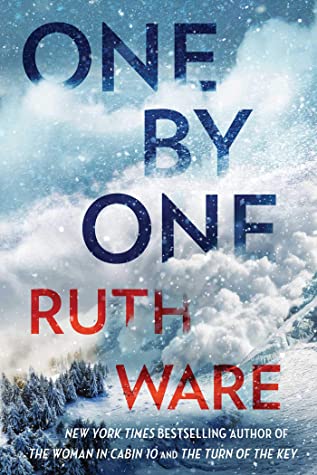
One by One

Rating: ⭐⭐⭐⭐
Author: Ruth Ware
Genres: Mystery, Thriller
Pub. Date: Sep. 2020 (read Sep. 2020 on Audible)

If you know me at all, you know I’m a huge Ruth Ware fan. The best phrase I can think of to describe her books, and I say it all the time, is ‘compulsively readable’. It seems like this book has just been getting mediocre reviews, but for the most part, I actually really liked it. 

I think one of the reasons I really liked this was setting. One by One is set on a french ski resort up in the alps. There’s a number of chalets located at the top of one of the gondolas and on this particular week, the chalet has been rented out by the employees of the company Snoop. Snoop is a popular social media app that can be used to listen to music and snoop on what other people, from friends to celebrities, are listening to at the same time. However, like any tech start-up company, there’s a lot of drama going on behind the scenes. 

The chalet is full of the Snoop staff and two employees when an avalanche hits, snowing them in and cutting everyone off from escape. Tensions mount and when several people start to show up dead, the whole chalet descends into chaos. Who can you trust when you’re snowed in with a killer?
The narration alternates back at forth between two of the individuals snowed in at the chalet and it has the old school closed door mystery vibe. Something about being snowed in and knowing the killer is among you is just enthralling. Plus I did get into all of the Snoop company politics and drama and I thought it added to the story. 

I flew through the book in just 2 days, but I have the same criticism I have with most of Ware’s book – the book climax is just too early. For some reason she always reveals the killer at like the 75% mark of the book and devotes the last part of the book to the “thrill” I suppose. But it never really works for me. Of course you need some kind of thrill to accompany your big reveal, but Ware always drags it on too long. Plus I was a little bit disappointed with who the killer turned out to be, but I didn’t guess it until close to the end, so I guess I can’t complain too much.

Overall I still really enjoyed this book. I’d give the setting an A. It’s not my favourite Ruth Ware (I think that may be Turn of the Key), but I definitely enjoyed the reading experience.

Beyond the Trees

Rating: ⭐⭐⭐⭐
Author: Adam Shoalts
Genres: Memoir, Non-Fiction
Pub. Date: Oct. 2019 (read Sep. 2020)

I have a bit of a backlog of reviews to write, but I decided to start with Adam Shoalts’ book, Beyond the Trees, because it’s the one that stands out the most in my memory. 

Adam Shoalts is a Canadian adventurer that had his 15 minutes of fame when he discovered a waterfall canoeing the Hudson Bay lowlands that wasn’t shown on any maps. From there he landed a job as Explorer in Residence with the Canadian Geographic Society, which pretty much sounds like the coolest gig in the world to me. 

In honour of Canada150 in 2017, he decided to do something extraordinary and canoe his way across the entire arctic circle in one summer. Now that sounds pretty wild to me already, but it reality, it’s even more wild than it sounds. There’s no obvious river that follows along the entire arctic circle, so Shoalts created his own 4000 km route across the great white north, canoeing dozens of rivers, many kilometers of portaging, and even canoeing across Great Bear Lake. And he did all of this solo.

Nothing makes me happier than exploring the great outdoors, so everything about this book enthralled me. What I liked most about the book was the realization that Canada still has so much unexplored and uninhabited wilderness. There’s really no where else in the world you could go where you could travel 4000km and only see about a half dozen people throughout 4 months. It really was just Adam and his canoe and the great wildness of the north.

Now upon reading this, it immediately becomes evident that Shoalts is not your average adventurer. It was easy to think from the outset that he was just a normal guy with big ideas, but don’t be fooled, he is a very experienced outdoorsman. He starts off by hiking 300km up the Dempster highway in Yukon in like 6 days and then proceeds to beat every single distance expectation he sets for himself on the trip, arriving early to each milestone. 

He starts his canoe adventure on the Mackenzie River and we are shocked to find out that not only does he plan to canoe 4000km, he plans to paddle more than half of it upriver. That’s right, more than half of his journey was against the current and in some rivers, against rocks and rapids. He travels using a number of different techniques, sometimes paddling, sometimes poling (using a long stick to push upriver against the bottom), sometimes dragging the canoe with a rope from the shore, and of course, portaging. A few times he even rigs up a little sail to his canoe to propel him upstream when the wind is behind him.

All in all, the journey takes him from the end of May to early September. He had to time the trip to leave right after the ice flows broke up in the river and planned to arrive at Great Bear Lake once the ice had broken up there as well. Unfortunately, it was a late spring and he had the added challenge of fighting against the ice on several parts of his journey.

Anyways. I don’t want to give it all away, but it’s safe to say this book captivated me. I can’t really pinpoint exactly why, his writing is pretty straightforward and honestly it’s not very introspective, so it was really just how incredible this journey was that propelled me through the book. I could see it not being for everyone, there’s a lot of descriptions of paddling and portaging that could get tedious. Plus I wish he’d spent a little more time on self reflection, but even still, I loved the book. I read complaints on his other book that he came across as really arrogant, I did not get that vibe at all in this book and actually thought him reasonably humble, so it seems like something he’s working on since his last book.

His journey was a real test of endurance and I have to conclude that Adam may be part machine to have undertaken it so quickly. It’s amazing to think of so much untouched wilderness. Thanks to Adam for sharing it with us!

Migrations

Rating: ⭐⭐⭐
Author: Charlotte McConaghy
Genres: Fiction, Dystopian
Pub. date: Aug. 2020 (read Sep. 2020 on Audible)

I really liked this book. It was a total impulse buy at a bookstore in Kits when I was out shopping with my sister. I was drawn to the front cover and thought the setting sounded awesome, so I bought it and started reading it the same day.

Migrations is set in a slightly dystopian future where the majority of wildlife has become extremely endangered or extinct. There’s no year, but it’s easy to believe in the possibility of this future as we continue to speed our way towards non-reversible climate change. Our main character is Franny and the story picks up with her in Iceland trying to talk her way onto a fishing vessel heading south. She’s had a troubled past but has always had a close connection to the ocean. She studies Arctic Terns, one of the last remaining birds on planet earth and followers of one of the most extreme migrations. Every year the terns migrate from the Arctic Circle to Antarctica and back again. My husband is an ornithologist and talks about birds all the time, so I couldn’t help but be intrigued by this one.

First off, the writing is excellent. I was flabbergasted when I googled the author and discovered that this is her first foray into literary fiction and that all her previous books have been YA fantasy… quite the departure! The writing is beautiful, but also compelling and I was immediately dragged into the story. The plot and setting are equally wonderful and I was hooked from the first chapter when Franny wildly throws herself into the freezing cold ocean to rescue someone that didn’t need saving.

Franny convinces Captain Ennis Malone to take her on board under the promise that the terns will help lead them to fish. The fishery is still open despite the dwindling fish stocks and Malone is chasing after a legendary catch of fish so that he can finally return home to his family. The story takes us from Iceland to Antarctica, while the sordid details of Franny’s past are slowly revealed to us and we realize she’s not just running towards the terns, but away from her past.

It’s definitely one of the more bizarre plots, but what literary fiction isn’t just a little bit weird? It’s what makes it so compelling. Franny is a deeply damaged individual, but it’s only through traveling back into the past with her that we realize just how deeply she has hurt and been hurt. McConaghy explores the impact of our childhood experiences on who we grow up to be and whether we are doomed to repeat the cycles of our past.

There was just one part of this book I didn’t like, and that was how the author portrayed Newfoundland. That’s right, my beautiful little island was featured in this book! As we start to meet all the crew of Malone’s fishing vessel, I wasn’t at all surprised to find that this small crew of diehard fishermen would include a Newfoundlander. But when the crew are forced to land in St. John’s, I became disappointed at McConaghy’s portrayal of the island.

The crew lands in St. John’s to jeers of protestors wishing death on the fisherman for overfishing the ocean. While I believe Newfoundlanders absolutely understand the importance of not overfishing, fishing is their heritage and they’re known as some of the kindest people in the world, so I couldn’t imagine any future where fishermen would be getting death threats upon landing on shore. Also, the family the crew stayed with lived within driving distance of St. John’s at a bonafide lighthouse with a sandy beach. Like no, Charlotte McConaghy, you have clearly never been to Newfoundland. Like, is this family the Parks Canada manager at Cape Spear? Or are they going on a multi-hour drive to get to one of the like 3 sandy beaches in Newfoundland? I mean maybe we’re supposed to believe Newfoundland has become some kind of tropical paradise due to climate change, but like, come on, it’s called ‘The Rock’ for a reason.

Anyways, I can try to overlook it for the sake of the book, but it did make me question what kind of research the author put into other parts of the book. It was still a compelling 4 star read for me, but not perfect.

Kim Jiyoung, Born 1982

Rating: ⭐⭐⭐
Author: Cho Nam-Joo
Genres: Fiction
Pub. date: Oct. 2016 (read Sep. 2020)

Kim Jiyoung, Born 1982 is a small book that packs a punch. I think this has only recently been translated to English (although I’m not totally sure), but I’m so glad it was because it’s such an interesting read about the lives of Korean women and how relatable sexism is all over the world.

As the name suggests, this book is a short recount of Kim Jiyoung’s life, from her childhood, school years, early career, and eventually motherhood. At every stage of her life Jiyoung recognizes how she is treated differently. How her brother was prioritized above her as a child, how she was misunderstood in middle school, how hard she had to struggle to find a job and how little her employer valued her compared to her male colleagues when she finally did start working. Then it covers the challenges of becoming a mother and the different expectations that are placed on women and how their desires and dreams are always de-prioritized.

There’s nothing shocking in this book. I was in no way surprised by the way society de-valued women or the hardships Jiyoung was up against. But I think seeing these inequalities and microaggressions spread out over the course of one person’s life really does push home the unfairness of it all. When you take into account each incident on it’s own, it’s easy to dismiss, but seeing the collective impact is really frustrating and exhausting.

It’s also easy to ignore the inequalities of those in other countries. “oh but we live in a developed country, it’s much better here”, but the fact was that even though this book takes place in Korea, everything was just so damn relatable! The mentality of boys will be boys as a child just perpetuates society’s reluctance to ever hold men accountable for their actions. Prioritizing your son’s needs feeds into a culture of valuing and rewarding men’s contributions more than women’s. And preparing only your daughters for parenthood and marriage creates a generation of men that have no domestic skills and leave women to assume all the roles of unpaid labour.

It’s a simple book and a quick read, but a meaningful one. I love what the author did with the ending and thought it was so genius. It’s easy to identify the ways in which society has failed, but how can we possibly change it when there’s so little understanding or desire from men to see any change. It’s a system that has always benefited men, so even though they might empathize with women like Jiyoung, ultimately it makes no difference to them. The system benefits them and therefore there’s no incentive to change it. I think this is one of the greatest challenges feminism faces and no matter where women are from, we can all relate.