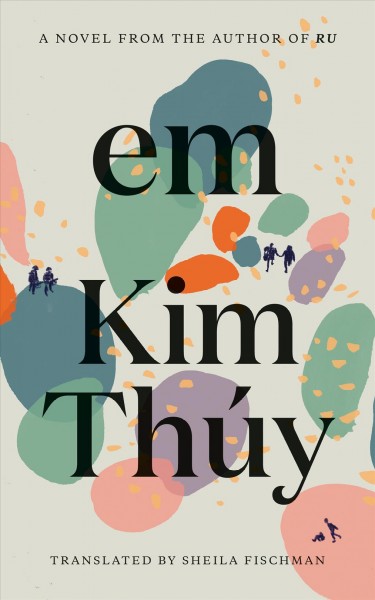
This is going to be a short review to match a short book. Em was the last of the Giller Prize nominees that I read. I’ve seen the author’s other book, Ru, floating around the Canadian Lit scene for years and decided to give this one a try when I saw it on the longlist. I was intrigued by the time period, ‘Operation Babylift’, and the impact of the Vietnam War on the beauty salon industry in North America, as detailed in the synopsis.
I’ll say upfront that of all the nominees I read, this was my least favourite. I did still like it and was impressed by how much history Thuy was able to cover in such a short book – I thought it was a solid 3 star read. But it was an ambitious novel and I felt it just didn’t deliver on what I thought I was getting from the book jacket. The book is told mostly in prose, which makes for a quick reading experience, which is exacerbated by how quickly Thuy jumps from topic to topic.
I can see why it would be nominated for it’s unique style and it is perceptive. She says a lot with a limited amount of words, which is definitely a skill, the style just didn’t quite work for me. I think the first part of the novel is the strongest, which focuses on the My Lai massacre. This really drew me into the book and it was interesting the associations Thuy made to move the story along. I just wanted more from the rest of the narrative and didn’t find the part of the story set in America to be as tightly executed. It almost worked, I just wanted a bit more from it.
I read and loved The Break several years ago, so I was really excited to see The Strangers on the long-list for the Giller Prize. I think this was my favourite of the four nominees I read, so I was a little disappointed not to see it make the short-list.
The Strangers focuses on 3 generations of metis women in the Stranger family, featuring 4 perspectives in total. The first two perspectives are from Phoenix and Cedar, sisters and some of the youngest members of the family. Phoenix is in a youth detention centre and Cedar has been bouncing around in foster care before settling in to live with her father’s new family. The other two perspectives are from Elsie, their mother, who suffers from a drug addiction and is continually trying to get clean, and Margaret, their grandmother (Elsie’s mother), who never quite got to live the life she wanted.
Vermette is a very accomplished writer. She had me hooked from chapter 1, which is so emotional and left me immediately gutted. The first two chapters are about Phoenix and Cedar and these two characters kept me captivated throughout the entirety of the novel. They both have two very different stories and I think the juxtaposition of their two lives is what made this narrative so compelling. Elsie’s storyline was probably my least favourite of the 4 as I found her narrative to be a bit repetitive, but the inclusion of her perspective is so important to the overall themes of the novel.
I liked Margaret’s storyline as well and found her to be a fascinating character, but it’s the only perspective that’s not told at the same time period as the rest of the characters. We get flashbacks from all characters, but none of Margaret’s story is told in present day, which I found made it feel a bit disconnected from the rest of the novel. Singularly, every single one of these perspectives is powerful, but I found the first 3 to work together as a more cohesive story. Margaret’s felt like it could have been it’s own narrative and while it added further context, it was somewhat separate from the rest, though still impactful.
But really this is a minor complaint. Multi-generational family dramas are my favourite kind of story and this is one that packs a punch. I was sad not to see this make the shortlist for the Giller, but so glad it’s still getting the praise it deserves! Definitely recommend checking this one out. Also, that cover art is gorgeous!! 4.5 stars.
My attempt to read a bunch of the Giller Prize longlist has been going so well this year! As a Canadian I always get excited about this list, but I’ve never dedicated so much time to working through the nominees before. I usually get more into Canada Reads in March, but I have to say, reading through the Giller nominees was a much more satisfying experience than I’ve ever had participating in Canada Reads. This just seemed to be a much more quality selection for me and I can say that I really liked everything I read!
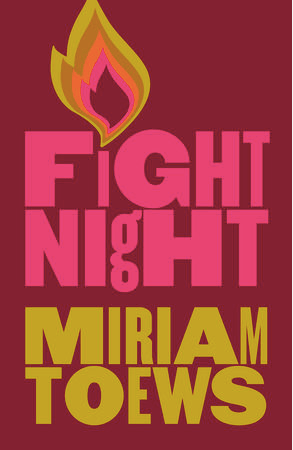
In total I read 4 of the 12 nominees on the long list, but Fight Night was the only one I read that made it to the short list. I’ve been aware of Miriam Toews for a long time, but the only book of hers I’ve read is Women Talking, which I absolutely loved. I didn’t like Fight Night as much as that one, but I was so pleasantly surprised with this book! Because Women Talking tackles such a heavy topic, I think I was expecting something a little darker from this book – it was so lovely to read this humourous take on a multi-generational family instead.
Fight Night is told from the point of view of 9 year old Swiv. She has been expelled from school and as a result is living at home full time and being (somewhat) tutored by her grandmother. Her mother is pregnant and her father is missing; to help her process her circumstances and surroundings, her grandmother has her write letters to her unborn sibling “Gord”.
I’ll say upfront that I struggled a bit with Swiv’s voice – not that I found it hard to read or that I didn’t enjoy it – just that I struggled to believe she was actually 9 years old. She read a bit more mature to me and kept picturing her as a 12 year old rather than 9, but otherwise, this was such a sweet and fun book to read.
We get to spend time with Swiv, her mother, and her grandmother and I came to love each of them very dearly. Grandma has an incredible zest for like that immediately endears everyone around her, while her mother struggles with her mental health and missing husband. She loves Swiv fiercely and fights to stay strong for both her and Gord. It is an entirely character driven novel that captures a truly beautiful relationship between 3 generations of women.
I don’t have too much else to say about the novel except that it’s a great read if you’re ever feeling down and the humour is really what carried the book for me. I did think there were some structural weaknesses – one of my favourite parts was when Grandma recounts Swiv’s mother’s history for her while they’re on the plane to California, but I found the timing and delivery to be a bit awkward, like Toews knew what she wanted to include, but couldn’t find a graceful way to do it. Overall I could have done without the trip to California entirely and found it a bit distracting to the greater themes of the novel. I don’t think it’s the strongest of the nominees I read (I really would have liked to see The Strangers make it to the shortlist), but I would definitely still recommend Fight Night. Overall it was a joy to read!
Now that I’ve finished Phoebe’s latest book, I think you can officially induct me into the Phoebe Robinson fan club. I’ve read all 3 of her books very shortly after they were published and she has definitely become an auto-buy author for me.
Her first book, You Can’t Touch My Hair, was pretty good, but I was bowled over by her second book, Everything’s Trash, But It’s Okay. She has this wonderful mix of essays that are both funny and meaningful. She makes me laugh out loud, while also sending me deep into thought about how I interact with the world as a white woman. Honestly, I would love if every essay in her book was as unforgiving as her essays on motherhood and the white saviour complex, because these essays worm their way into my bones and stay with me long after reading. But I can understand how her more humourous essays also added much needed balance to the anthology.
I think this is probably my favourite book of hers to date because she covers so much ground in so few essays. The two essays mentioned above spoke to me more than some of the others, but I see so much value in everything she has written and she does a good job and writing to a lot of different audiences. No question, her essays on being a boss, travelling, and her hair are not written for me, but they still make me reflect on how differently we all interact with the world based on race, class, and gender.
I also loved that this book dedicates a lot of time to talking about the pandemic and quarantining. Not in a negative way about how our governments handled the crisis or anything, but about how we as individuals dealt with suddenly being forced to live and work in close proximity to our partners for months on end. The pandemic is finally starting to show up in some of the books that I’m reading and it was so refreshing to listen to Phoebe talk about it. We’ve all been through something over the past year and I’m so excited for the type of literary reflection we’re going to start getting in the coming years.
I definitely thought some of the essays were better than others and I would have loved to get more, shorter essays instead of so few long ones, but I can’t deny that I loved everything about this book. Phoebe knocks it out of the park on the Audiobook narration and I’m determined to finally listen to her podcasts to fill the void until her next book comes out!
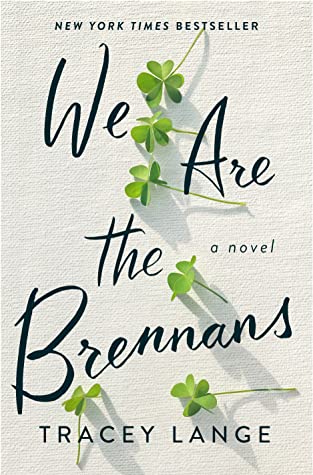
Rating: ⭐⭐ Author: Tracey Lange Genres: Fiction Pub. Date: Aug. 2021 (read Sep. 2021)
I was so stoked for this one, but it turned out to be such a disappointment. It’s an easy read, with the flow between chapters being pretty smooth, but I wasn’t really a fan of the writing style. It was pretty simplistic, which is fine, but I feel like this has been marketed as literary fiction and I just didn’t see it.
We Are the Brennans tells the story of the Brennan family and their life in an Irish suburb of New York. I’m sure you guessed it from the cover, but the Brennans are Irish and as such, had a pretty conservative Irish-Catholic upbringing. Everything seemed to be going great until Sunday Brennan up and left 5 years ago and the family started falling on tough times. But now Sunday is back and the entire Brennan Family are forced to face the secrets of their past.
I live for family dramas, but this one just didn’t work for me. Aside from disliking the writing style, I thought the entire plot was predictable and pedestrian. I disliked almost all of the characters, which isn’t usually enough for me to dislike a novel, but I felt like everything in this book was overly dramatized because in reality, the author didn’t have that great a storyline. I feel like she had somewhere she wanted to take this story, but it was so poorly executed. It had a lot of the pitfalls of a debut novel in that Lange had a lot of ideas and no idea how to tie them all together in a meaningful way.
But mostly I think I just disagreed with her central themes. She had a lot of ideas about family and shame and I struggled to agree with any of them. I’ll get into the details in the spoiler section of the review, but by the end of the book I couldn’t help but acknowledge that me and Lange are just not on the same page. I feel like this Irish immigrant space is something that she knows really well, and maybe other Irish immigrants in NY might be able to relate more, but I also grew up on an island full of Irish immigrants and I felt that she really romanticized the Brennans in an unhealthy way. The book is all about family, but I thought every member in this family was toxic. She kind of tries to acknowledge this towards the end of the book (via Vivienne), but then she’s just like “sod it, they may be toxic, but they all love each other, so it’s fine”.
Anyways, it’s hard to really get into it without spoilers, but a lot of this book hinges on the reveal of a big secret about halfway through the book and this is where it all went downhill for me. I thought the secret was so problematic and that the author had so many blind spots about it that I just couldn’t move past it. So for me this book was a big miss. It’s still a somewhat entertaining read, but I wouldn’t recommend it – there are so many better family dramas out there – skip this one. . . . . . Okay, now for the spoilers. There were two parts that killed this book for me – the “secret” reveal and the ending. Let’s start with the secret.
So the big secret is basically that Sunday got drunk one night when her family was in Ireland and the bartender tricked her into coming up to his room with him. He comes on to her, she leaves, and then he pushes her down the stairs and leaves while she bleeds from a miscarriage.
This scene is so traumatic for her that she leaves New York for 5 years because she can’t bear to tell her family. She is obviously traumatized, embarrassed, and ashamed by the incident. We had an interesting discussion about this secret at book club because we thought it was silly that she didn’t feel she could tell anyone about this. She didn’t do anything wrong and her family should really only feel sympathy for her. In the long list of things that could have gone wrong for her as a woman, we felt like maybe this wasn’t the worst case scenario, the trap of “it wasn’t really that bad”.
This is the one part of the book Lange gets right. Any situation that harms a woman physically or mentally is “that bad”. Society has a tendency to create an unfair hierarchy of trauma, which only results in silencing a lot of women. I read a whole anthology about this concept (Not That Bad by Roxane Gay) and I did really like that Lange never belittled the trauma that Sunday felt from this incident.
What I didn’t like was how it all played out. Because the real reason Sunday feels she can’t tell any of her family members is because she thinks they’ll literally go out and kill Billy, which turned out to be a pretty damn justified fear. So she doesn’t tell anyone out of the fear of how they will react. Sure, it plays into her catholic upbringing, but it drove me crazy that she underwent 5 years of self-imposed exile over how someone else might react to her pain. So she not only takes ownership of what happened to her, but she takes on the added responsibility of what her brothers might or might not do in their anger.
Now I know women do this all the time – take on the responsibility of other people’s actions, but I’m f*cking sick of it. Lange could have taken this whole ordeal and written something really meaningful and healing about it, but instead she takes a woman’s pain and uses it for drama. There are several instances of victim blaming where both Sunday and Kale (maybe Denny too?) think that she had too much to drink, indirectly blaming her for Billy’s actions. There’s some exploration of how the ordeal was traumatic for Sunday, but I don’t feel like Lange ever explores that in any depth. Sunday’s assault is simply used as a lazy way in which to create this time and space between her characters and to spurn on the actions of the rest of the book’s male characters. I detest when assault is used solely for drama and the motivations of other characters and try as I might, I just couldn’t look past it throughout the entire second half of the novel. Denny, Mickey, and Kale are all toxic characters and the fact that they “love” Sunday doesn’t excuse them all going out and being violent assholes about it. In fact, it’s so toxic, her fear of it drives her away from them for 5 years.
Which brings me to my second point – the ending. So Kale leaves Vivienne even though he knows the Brennans are all toxic and liars (but their “his” liars, AWWW), and everyone seems to finally be moving forward, acknowledging that as a family they can band together and support one another because that’s what families do. But then we find out Mickey actually murdered Billy (which was also super predictable), and they’re just like, “oh…. but it’s okay, we’ll get through it together like we always do”.
I’m sorry, but what kind of messed up theme is that. What a way to end your book, with a family condoning and shielding a murderer – yeah, that’s exactly the kind of message I want to take with me from this book! If this was a thriller, sure, but it’s not and it doesn’t fit. I feel like Lange just places the Brennans on this pedestal and because of her proximity to the subject matter, she can’t see what kind of bias she brings into this story. Love doesn’t excuse your actions. You show love by showing up for your family members and creating safe spaces for them. If the theme was about surviving these kind of toxic behaviours it would be great, but this book only condones them.
Anyways, there’s other things I didn’t like (namely the treatment of Vivienne), but I feel I’ve ranted enough. Obviously I didn’t like it and I like it even less now that I’ve taken the time to vocalize why I didn’t like it. I’m honestly blown away by how many high reviews this got on goodreads. I feel like I missed something, maybe I did, but I’m still done with this book. Good riddance.


 The Paperback Princess